Articles & essays
-

What Makes a Mining Project Financeable?
Critical minerals demand has changed the mining conversation, but every project still has to prove that it can become a financeable business. This article examines the questions capital should ask before committing to a mining asset, across geology, permitting, infrastructure, revenue visibility, funding strategy and execution.
-
Anomic Mining: Why Illegal Mining Is Not Always the Full Diagnosis
Anomic Mining describes the moment when illegal mining stops being only an activity outside the law and begins to reveal a deeper institutional condition, a territory where legality remains formally present, but no longer organises extraction, protects formal actors, sustains traceability, or governs mineral flows with credibility.
-
The Return of the Material Economy
The World Bank’s new industrial policy report signals more than a technical adjustment in development thinking. It reflects a broader return of production, strategic sectors, and state capacity to the center of the debate. Read through a Geopolitical Mining lens, that shift carries a deeper implication: industrialization in the twenty first century rests on a…
-
Beyond ESG: Rethinking Sustainability in Mining
As the material economy returns, mining is forcing a more serious question: not whether sustainability matters, but whether the dominant sustainability frameworks are still fit for sectors shaped by time, permitting, legitimacy, and execution. This article revisits ESG, maps the main conceptual alternatives now emerging, and argues that mining may require a more systemic form…
-
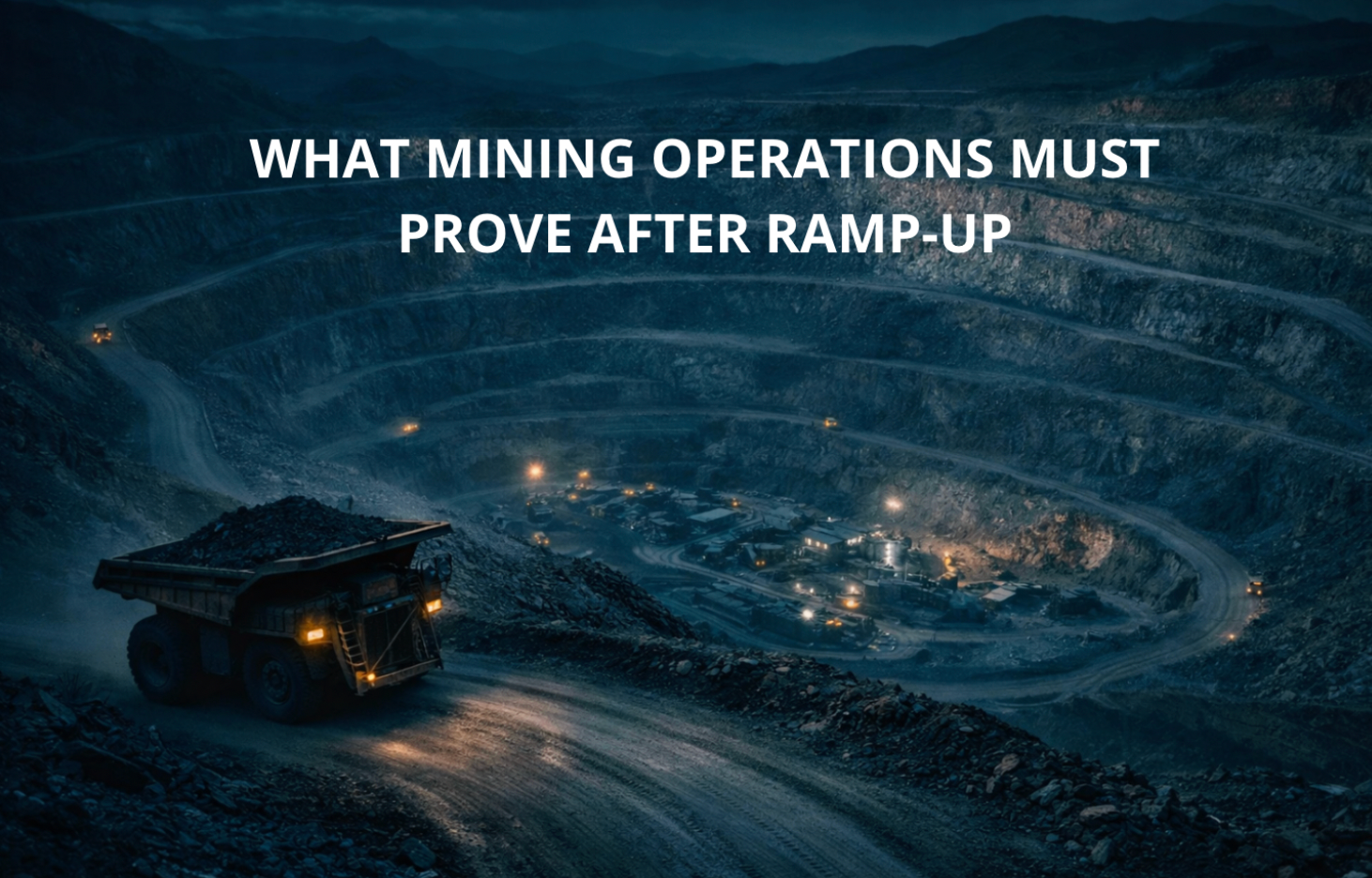
What Mining Operations Must Prove After Ramp-Up
Ramp-up is often treated as a visible milestone in mining. But the more revealing phase comes later, when an operation must prove that throughput, recoveries, mine sequence, continuity and cost discipline can hold together under real operating pressure. Using Mantoverde and Caserones as contrasting cases, this article explores why visible progress and operating maturity are…
-

Minerals Turn Strategic. Exploration Capital Stays Tactical.
Mining has entered a more strategic era, but exploration capital still flows mainly toward lower. risk, shorter horizon opportunities. That tension is now visible in the latest exploration, financing, and policy data.
-
When Mining Becomes Geopolitical, the State and Diplomacy Must Change
Mining is no longer operating only as an extractive sector. As critical minerals become part of industrial resilience, economic security and alliance architecture, both the State and diplomacy must adapt to a new geopolitical role for mining.
-

PDAC 2026: When the Conversation Became Real Again
PDAC 2026 showed a more operational mining conversation. Permitting, timelines, costs, water, social licence, security, and execution moved to the centre, reflecting a sector increasingly focused on what it will actually take to deliver supply in this decade.
-
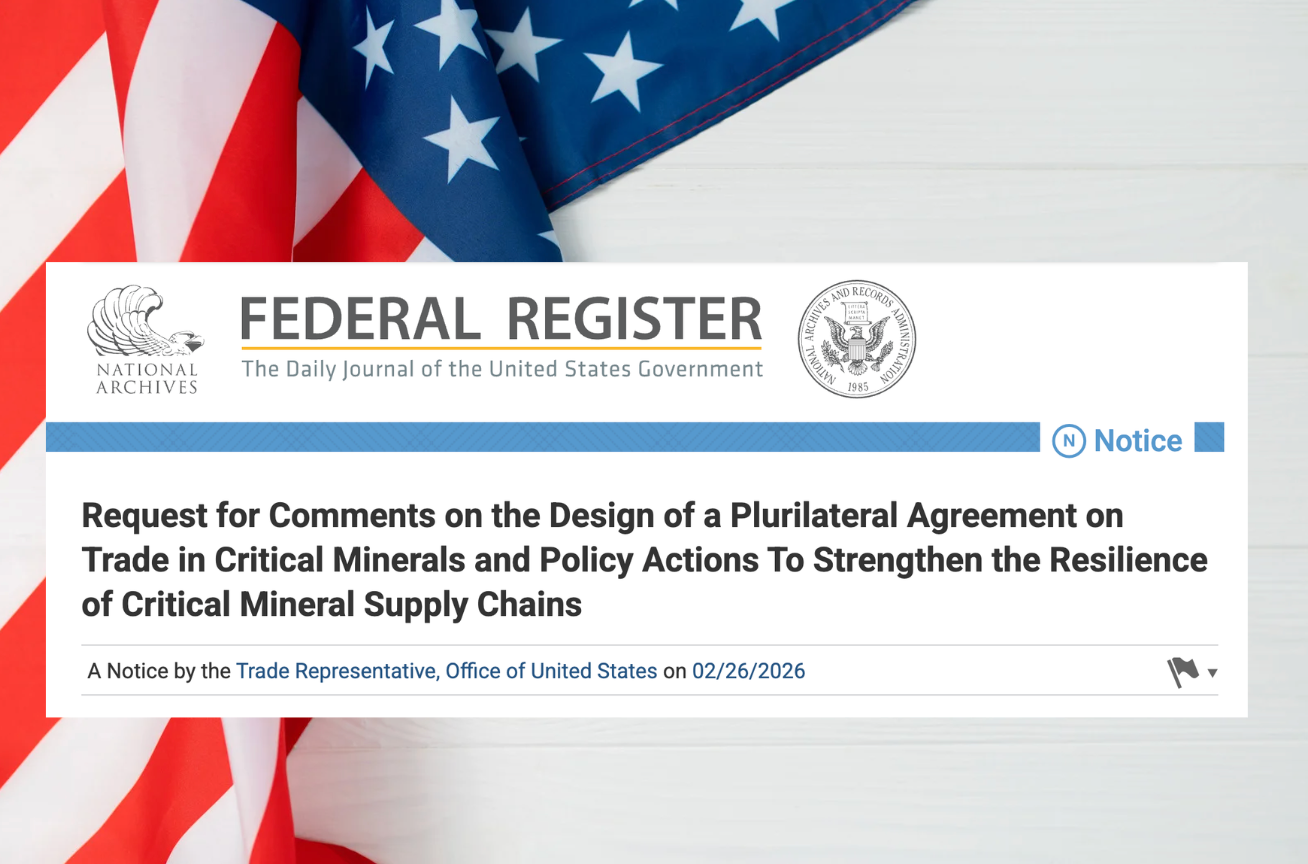
USA and Aligned Trading Partners, USTR Maps a Plurilateral Critical Minerals Deal
USTR has opened a formal consultation on a plurilateral critical minerals agreement with aligned trading partners. Behind the legal language, the notice begins to map a potential club architecture for prices, border tools and standards, and invites comments from any interested party before 19 March 2026.
-

2026: No Industrial Economy (or Industrial Security) Without Formal Mining and Social Legitimacy
By 2026, the main policy and business forums are aligned on one point: industrial security is no longer just about technology and capital. It also depends on reliable access to critical minerals and on whether formal mining is seen as legitimate by the societies that host it.