QM Books · Toronto
Mining Is Dead.
Long Live Geopolitical Mining.
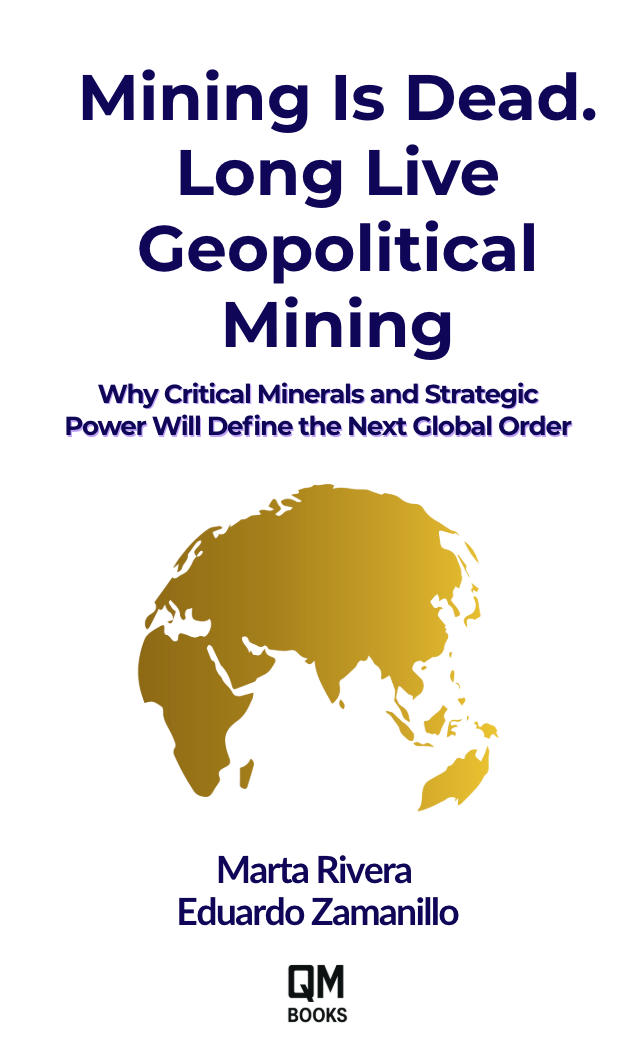
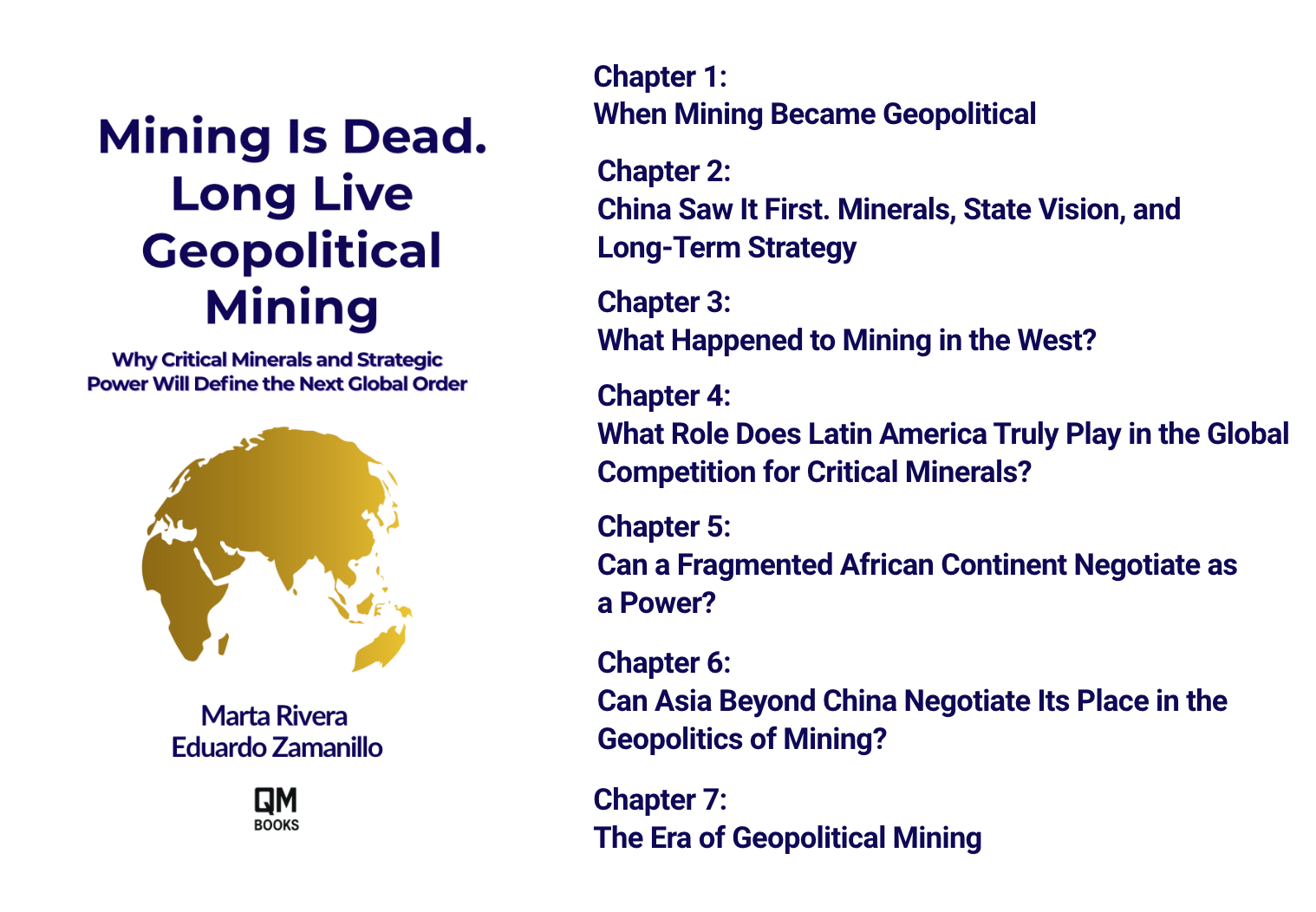
The foundational book behind the Geopolitical Mining framework.
The book examines how critical minerals, industrial policy, legitimacy, capital and state power are reshaping the global order.
It explains mining’s growing role in national security, technological autonomy, supply chain resilience and geopolitical competition, and what this means for companies and countries.
Reviews, citations and international discussion
Book reviews and wider Geopolitical Mining references
The book, its authors and the Geopolitical Mining platform have been discussed across policy, academic, financial and industry publications. The references below include book reviews, citations and commentary on analysis published by the platform.
International affairs · Book review
International Affairs · Chatham House
In July 2026, International Affairs, published for Chatham House by Oxford University Press, reviewed Mining Is Dead. Long Live Geopolitical Mining. Christopher Vandome described the book as a timely and accessible introduction to the geopolitics of critical minerals and highlighted its distinctive focus on how the mining industry itself responds to geopolitical pressure and strategic competition.
The World Today · Chatham House
The World Today · Chatham House
In September 2026, The World Today, Chatham House’s magazine, featured Mining Is Dead. Long Live Geopolitical Mining in a selection of reviews from International Affairs. The feature described the book as a timely and accessible primer on the politicisation of critical minerals and highlighted its analysis of the structural bottlenecks constraining Western efforts to rebuild mining capacity as its most direct policy relevance.
French strategic review
Revue Défense Nationale
In December 2025, Eugène Berg devoted a review spanning six pages to the book in Revue Défense Nationale, placing its argument on critical minerals, control of value chains and geopolitical power within France’s strategic debate.
Academic & strategic policy recognition
Resources Policy · Survival / IISS
The book has entered academic and strategic policy conversations through Resources Policy and Survival: Global Politics and Strategy, published by the International Institute for Strategic Studies.
Academic citations of the framework
Springer Nature · Journal für Entwicklungspolitik
Recent academic work is now citing both Geopolitical Mining analysis and the book. A July 2026 review in Mining, Metallurgy & Exploration cites a Geopolitical Mining article by Rivera and Zamanillo, while a 2026 paper in Journal für Entwicklungspolitik includes the book in its scholarly references on EU critical raw materials and geopolitics.
Official policy discussion
House of Commons of Canada
The book was cited and read in a Canadian parliamentary discussion on critical minerals, defence and strategic dependency.
Political & strategic media
The Spectator · Diplomatie / Areion24
The book and authors have appeared in political and geopolitical commentary, including The Spectator and Diplomatie.
International language reach
Portugal · Mexico · Türkiye
The framework has reached Portuguese, Spanish and Turkish speaking audiences through Expresso in Portugal, Expansión in Mexico and Madencilik Türkiye.
China & metals commentary
WorldMR · ChinaScrap
Chinese mining and metals portals have translated or republished analysis connected to the book, the authors and the Geopolitical Mining framework.
Financial & market commentary
Global Finance · Fastmarkets · IMEF
The authors and the book have appeared in financial and market intelligence coverage on Latin America, critical minerals finance, U.S. supply chain strategy and strategic minerals.
Industry & investment commentary
Rick Rule · Amanda van Dyke
The book has also entered mining investment commentary, including discussion by Rick Rule and a dedicated review by Amanda van Dyke.
Mining media & sector debate
MINING.COM · Mining Journal
Geopolitical Mining has been repeatedly cited in mining sector coverage, including analysis on Colombia, Argentina, Chile and Costa Rica. In the Crucitas debate, MINING.COM used the Geopolitical Mining concept of anomic mining to frame the gap between formal mining rules and realities on the ground.
Colombia Argentina Chile policy Chile sector Costa Rica Mining Journal
The book is available through Amazon and other international book retailers, and continues to serve as the conceptual foundation for the Geopolitical Mining platform.
Inside the book
What the book explores
Critical Minerals in the 21st Century
Copper, lithium, cobalt and rare earths connect mining with the technologies and industries at the centre of strategic competition. The book examines their role in artificial intelligence (AI), quantum computing, digital networks, the energy transition and national security.
It follows these connections into questions of mineral supply, processing capacity and industrial sovereignty, showing how decisions about resources influence technological and economic power.
China Saw It First
The book argues that China recognised mining’s strategic significance ahead of other major powers. It traces how sustained investment and control of midstream and downstream industries built advantages in refining, processing and manufacturing.
This experience is examined alongside the slower processes, fragmented regulation and narratives that have constrained mining in Western economies.
The Western Dilemma: Legitimacy and Speed
The book examines how permitting delays, institutional fragmentation and a loss of narrative purpose have affected mining in the United States, Canada and Europe.
It argues that Western democracies need a model that can combine speed with legitimacy and industrial execution with public trust.
New Global Strategies
Through cases including Indonesia, Canada, Argentina, Saudi Arabia, Brazil, the Democratic Republic of the Congo and Kazakhstan, the book examines how countries use mining policy to add local value, develop sovereign funds and strategic reserves, and build industrial and technological alliances.
It also explores the shift in the United States towards public investment alongside private capital, and the use of state instruments to accelerate industrial development and reduce strategic vulnerabilities.
Africa, Asia, and Latin America: New Power Arenas
The book examines how geological wealth in Africa, Asia and Latin America intersects with institutional, social and strategic challenges. It considers the conditions under which mineral resources can strengthen a country’s position in the global economy.
It also examines the pressures associated with illegal and informal mining, including distorted markets, damaged ecosystems and weakened institutional legitimacy.
A New Narrative for Human Progress
The book places mining within a wider discussion of human progress, examining how innovation, legitimacy and strategic purpose shape the relationship between the industry and society.
It argues for understanding mining again as a civilizational force, with a role in the material foundations of development as well as in economic and geopolitical strategy.
A Paradigm for the 21st Century
The book argues that the old extractive model is obsolete and examines the industrial, technological and political implications of that shift.
Geopolitical Mining is presented as a new global order shaped by strategic speed, industrial standards, social legitimacy and control over the material base of modern power.
Why it matters
For readers who need to understand minerals as power.
Control over minerals and processing capacity influences the ability to develop industries, sustain technological capability and respond to strategic dependencies. The book examines these relationships through artificial intelligence, defence, infrastructure, the energy transition and industrial policy, explaining how they affect the way countries compete and cooperate.
It is written for readers who need to connect developments in mining with decisions about security, investment and industrial strategy.
- Policy, diplomatic and government leaders shaping industrial strategy, mineral diplomacy and security partnerships.
- Business leaders, mining executives and capital providers evaluating mineral supply chains, projects and jurisdictions.
- Investors and analysts examining the connections between minerals, markets, processing capacity and geopolitical risk.
- Researchers, journalists and strategic communicators exploring the geopolitics of resources.
- Curious readers seeking a deeper understanding of the mining and geopolitical developments behind the headlines.
Sample pages
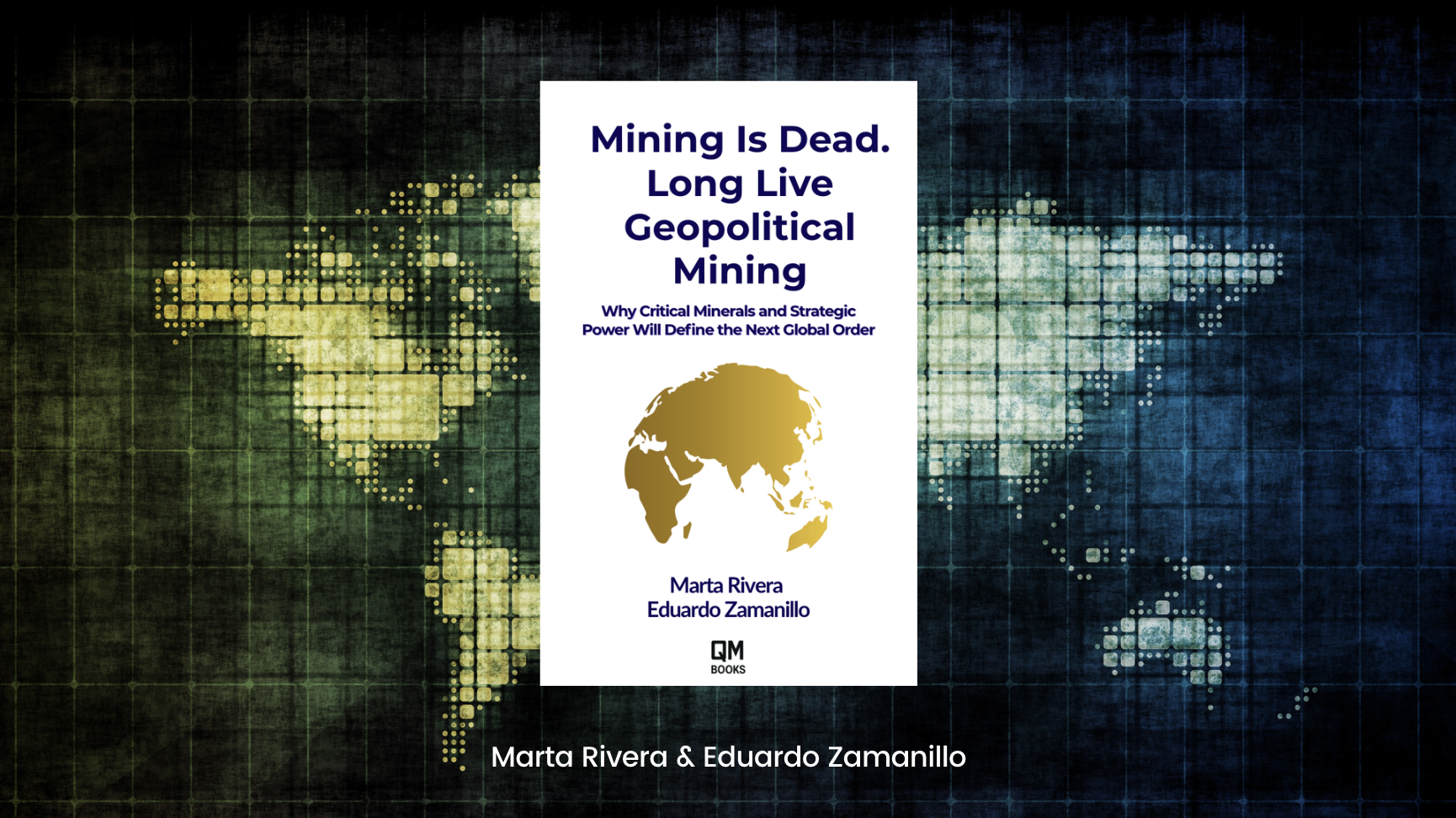
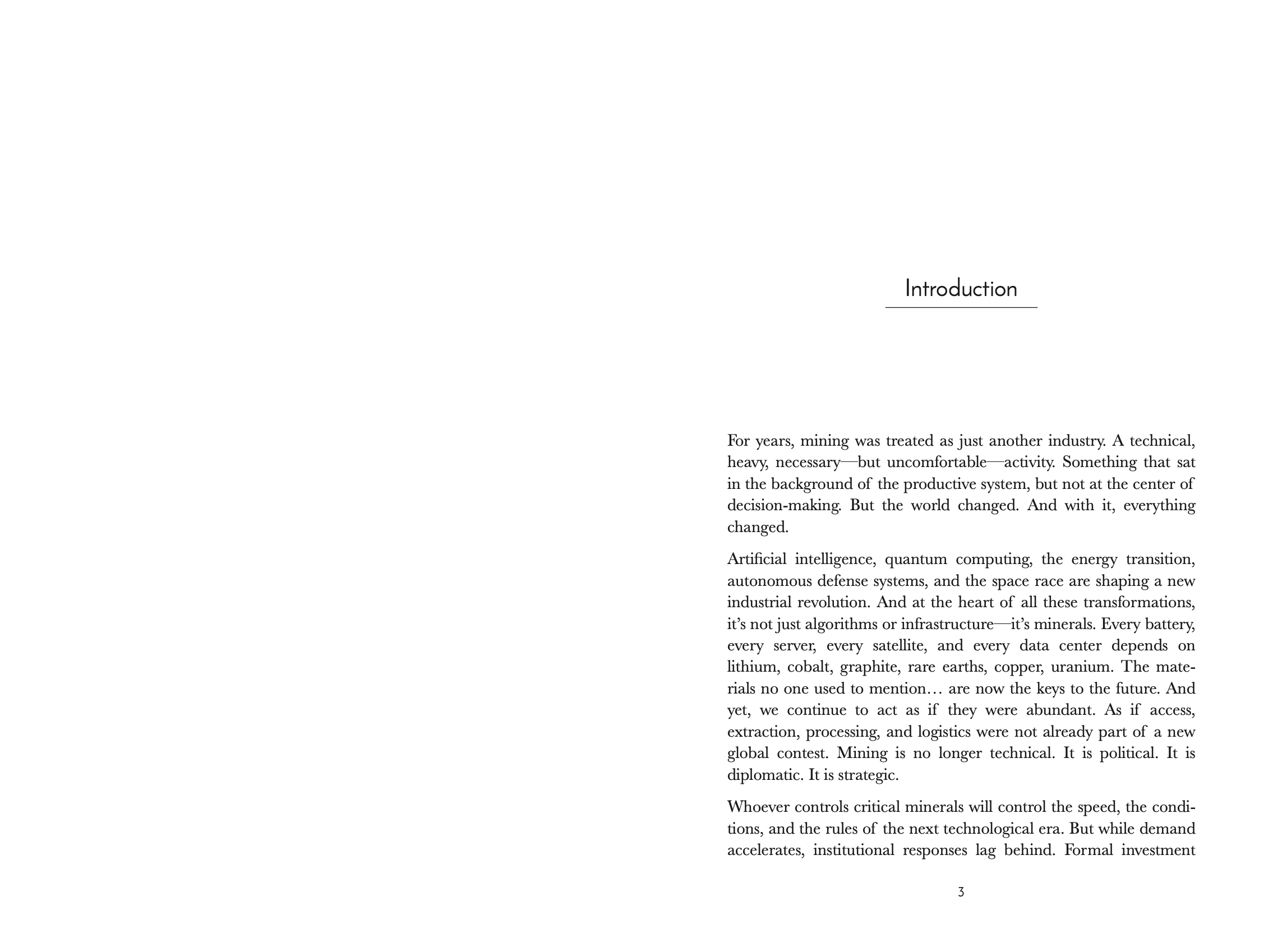
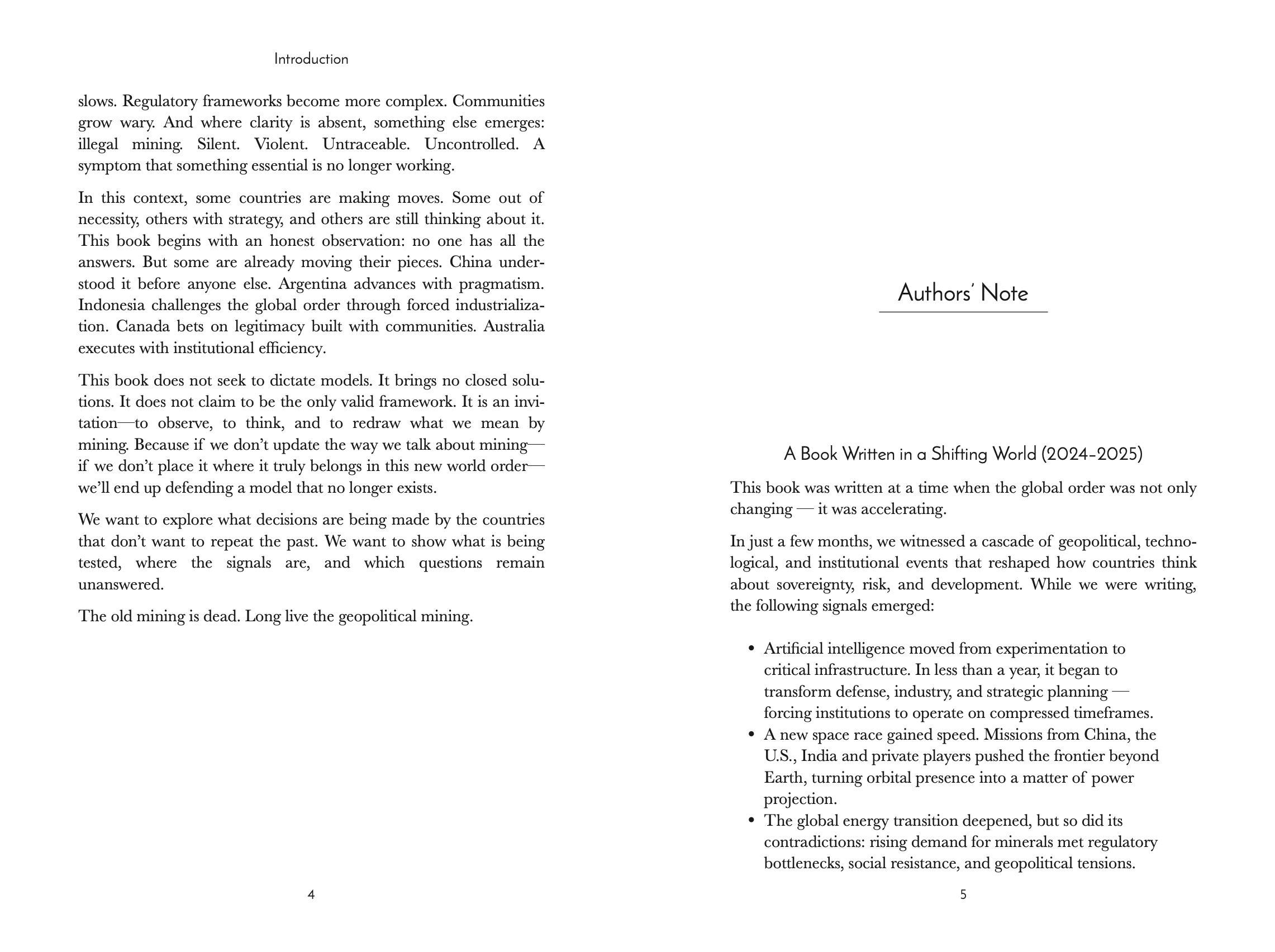
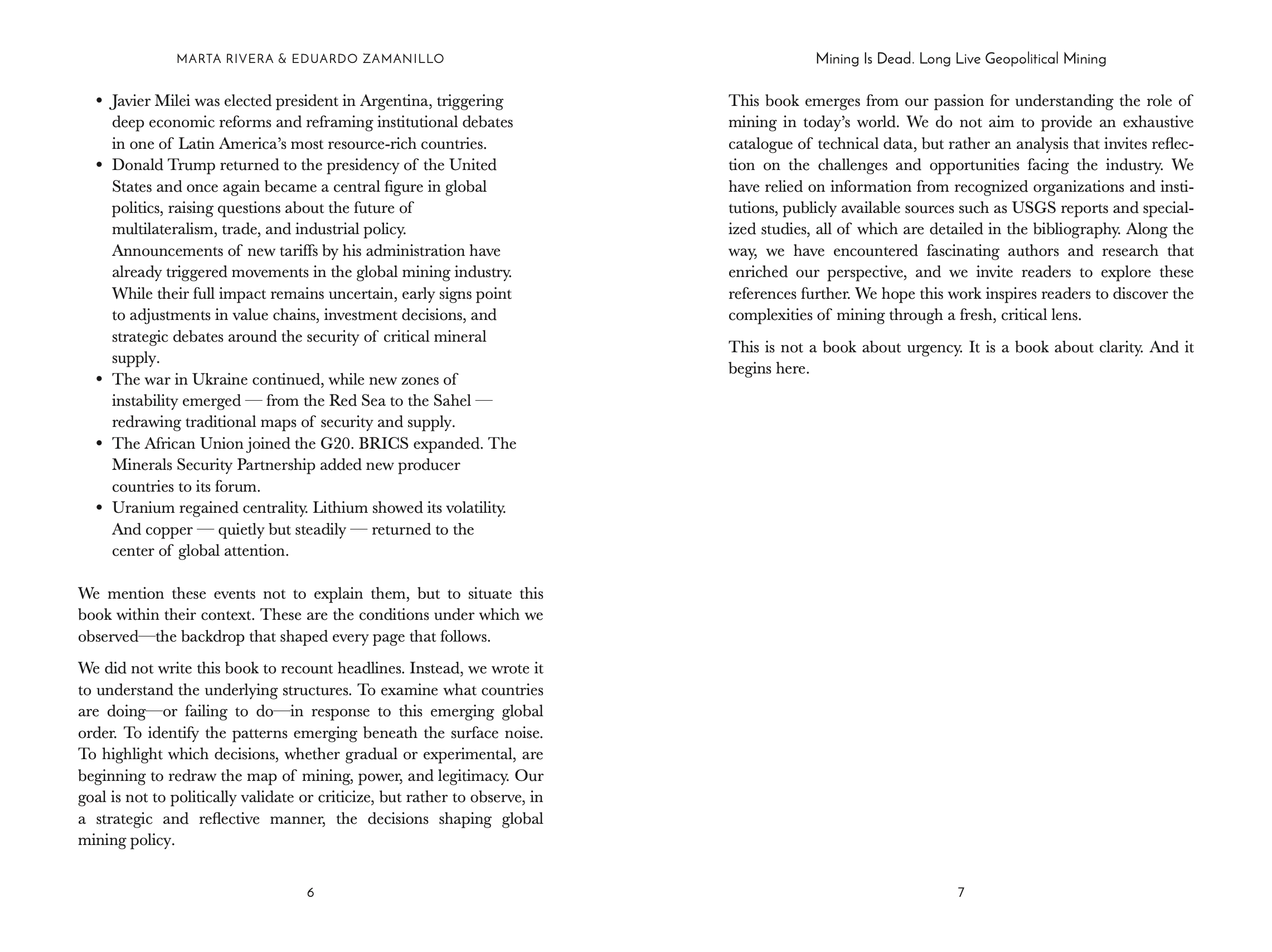
Read sample pages
Book details
Book details and editions
Full title: Mining Is Dead. Long Live Geopolitical Mining: Why critical minerals and strategic power will define the next global order.
Authors: Marta Rivera & Eduardo Zamanillo.
Publisher: QM Books (2025).
Languages: English, Spanish and French.
Format: Paperback and eBook.
ISBN (print): 978-1-0696106-4-5
ISBN (digital): 978-1-0696106-5-2
Contact: contact@geopoliticalmining.com
The book provides the intellectual foundation for the Geopolitical Mining platform. Its country analysis, articles and regular publications carry this perspective into the decisions and developments shaping mining today.
About the authors

Marta Rivera Muñoz
Marta is a sociologist with a Master’s degree in Strategic Communication. Her work focuses on narrative, legitimacy, institutional analysis and geopolitical positioning.

Eduardo Zamanillo
Eduardo Zamanillo is a mining engineer and advisor with international experience in project evaluation, mining business development, capital strategy and mine operations.