REGION.AMERICAS
-
Geopolitical Mining Weekly | Week of February 23 – March 1, 2026
This week’s note tracks how critical minerals are moving from strategy language into rules, enforcement, and supply discipline: USTR’s push toward a plurilateral critical minerals deal, rising USMCA review uncertainty, Zimbabwe’s export ban and its immediate lithium price signal in China, a new Indonesia-Gabon rare earth axis, and Argentina’s glacier law reform debate as a…
-
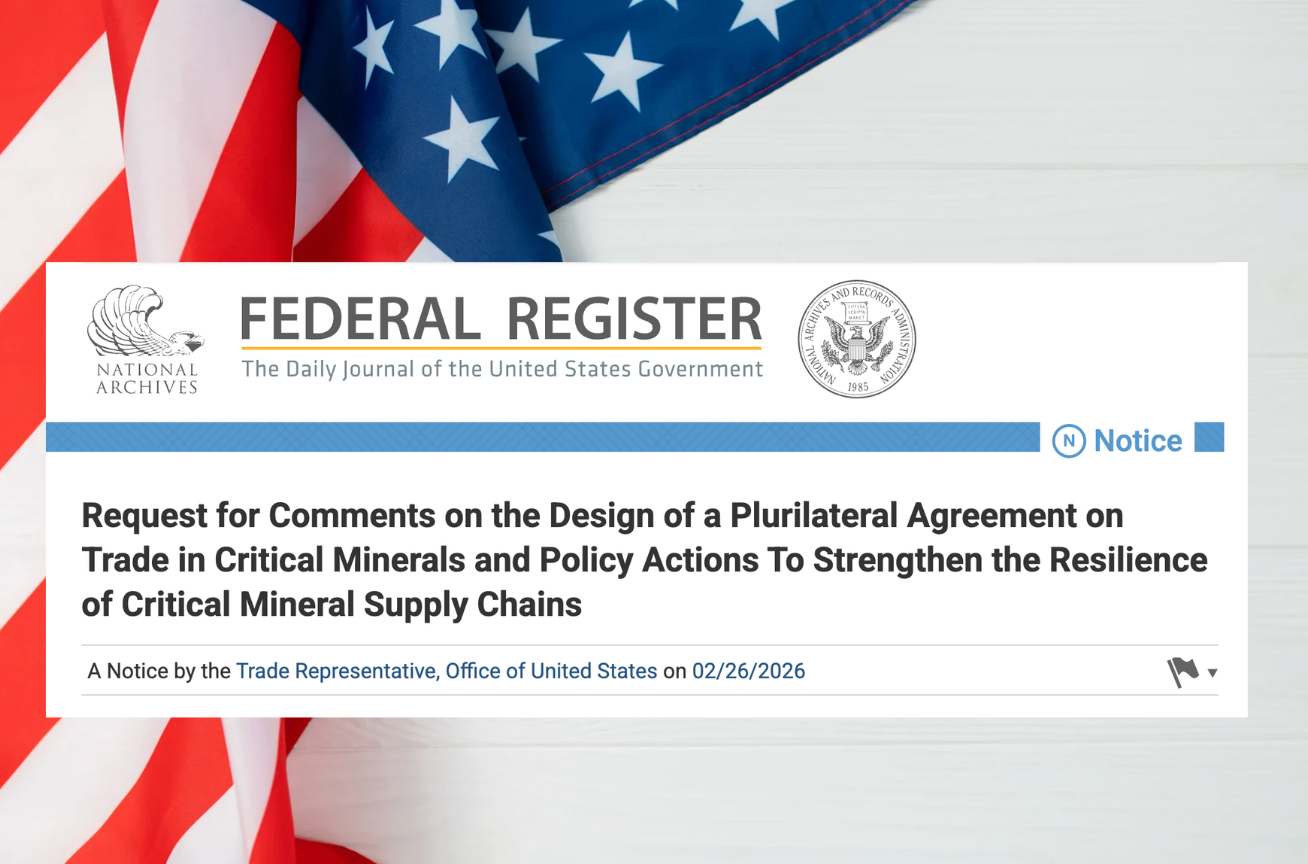
USA and Aligned Trading Partners, USTR Maps a Plurilateral Critical Minerals Deal
USTR has opened a formal consultation on a plurilateral critical minerals agreement with aligned trading partners. Behind the legal language, the notice begins to map a potential club architecture for prices, border tools and standards, and invites comments from any interested party before 19 March 2026.
-
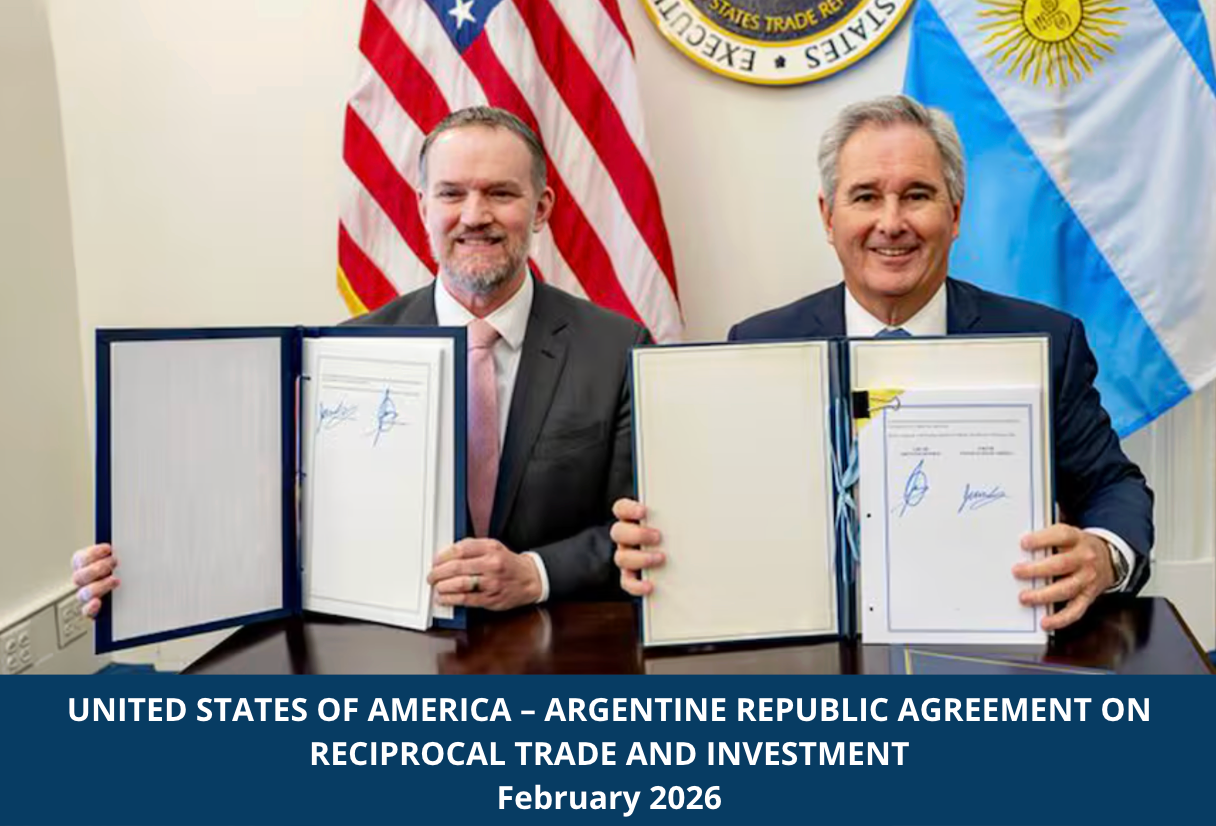
The Day USA Locked in a Critical Minerals Deal with Argentina, and the Questions It Raises for Chile
Washington’s ARTI with Argentina and its parallel Strategic Framework make critical minerals part of a wider security and industrial architecture. Argentina enters through an explicit lane with finance attached. The move raises practical positioning questions for the Southern Cone, including Chile.
-
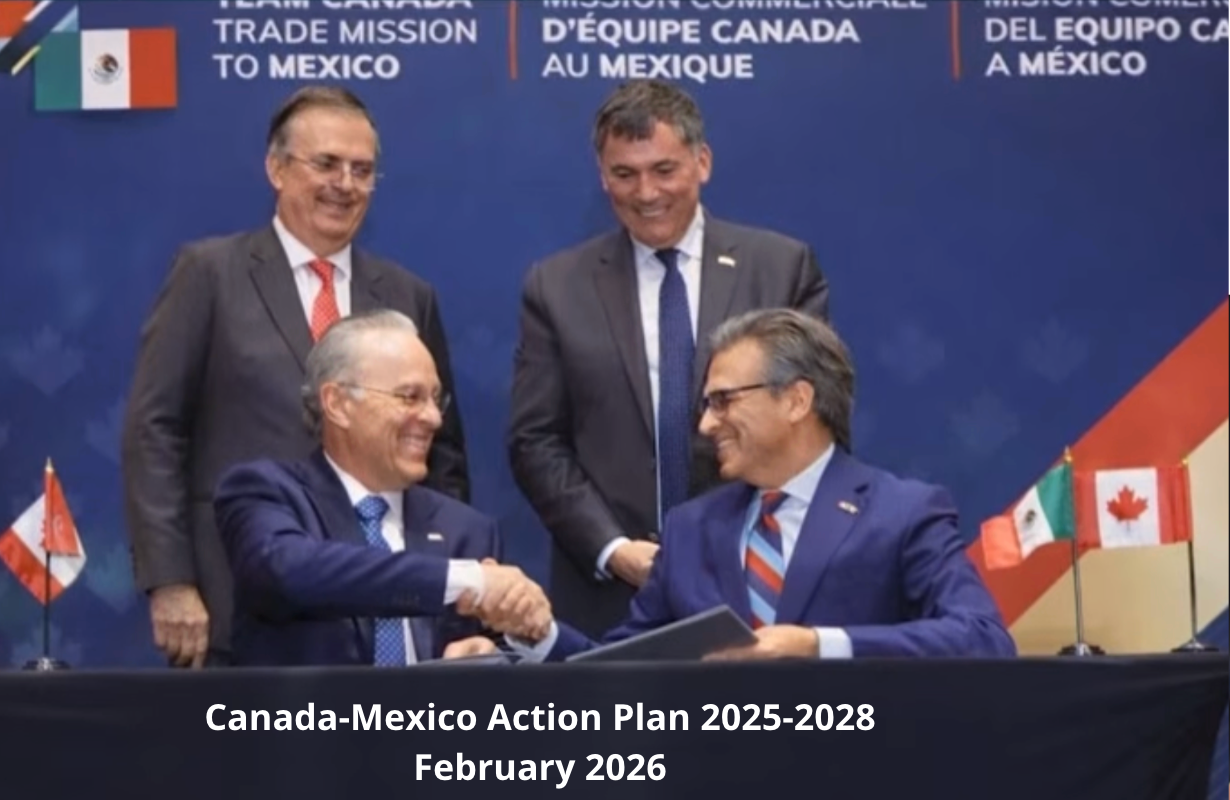
Geopolitical Mining Weekly | Week of 16–22 February 2026
This week’s Geopolitical Mining Weekly tracks how new US/Mexico/Canada links, US–Philippines and US–Argentina deals, an India–Brazil critical minerals pact, China’s rare earths price power and Canada’s use of public capital and fast track schemes are reshaping who controls critical minerals – not just in the ground, but in the rules, prices and institutions around them.
-
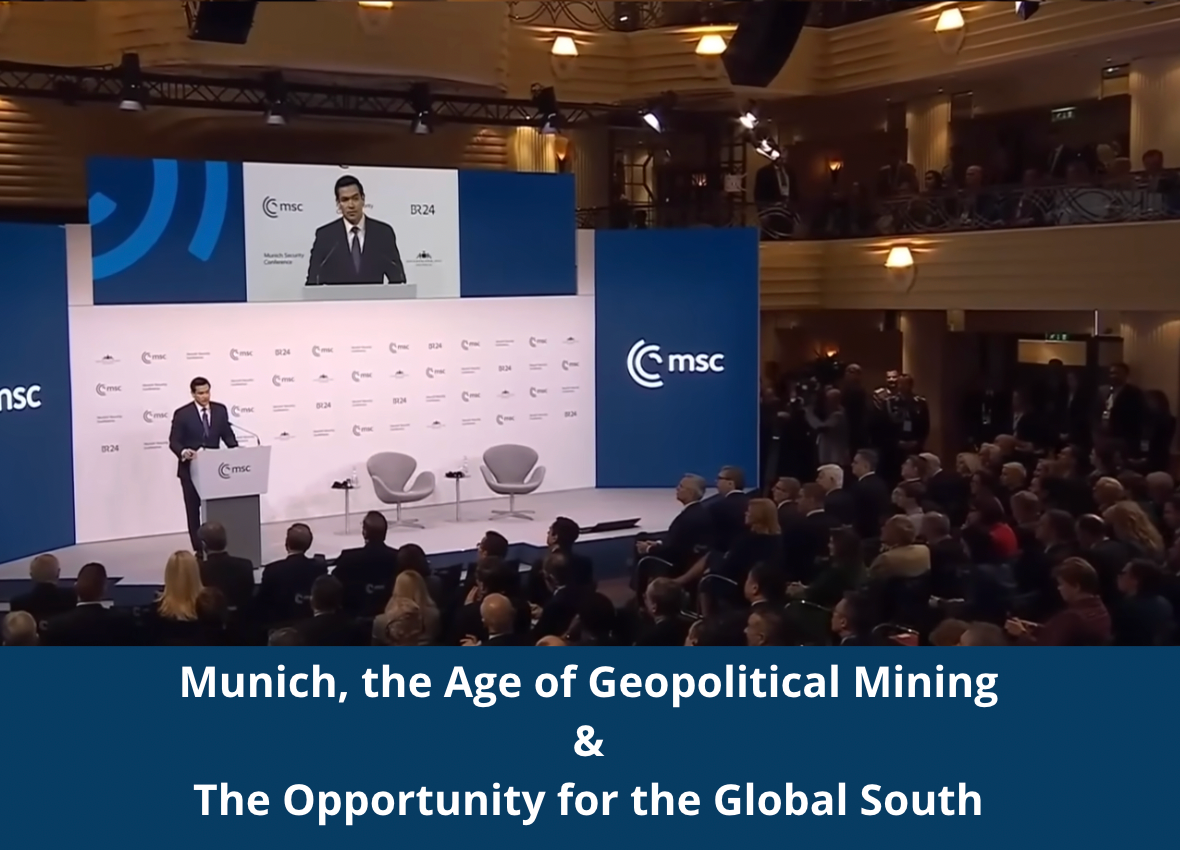
Munich, the Age of Geopolitical Mining and the Opportunity for the Global South
This article reads the 2026 Munich Security Conference through a Geopolitical Mining lens. It shows how the US, China and Europe now talk explicitly about minerals, industrial capacity and supply chains as strategic assets, and how that shift opens a window for the Global South. It also maps the risks that Munich did not fully…
-
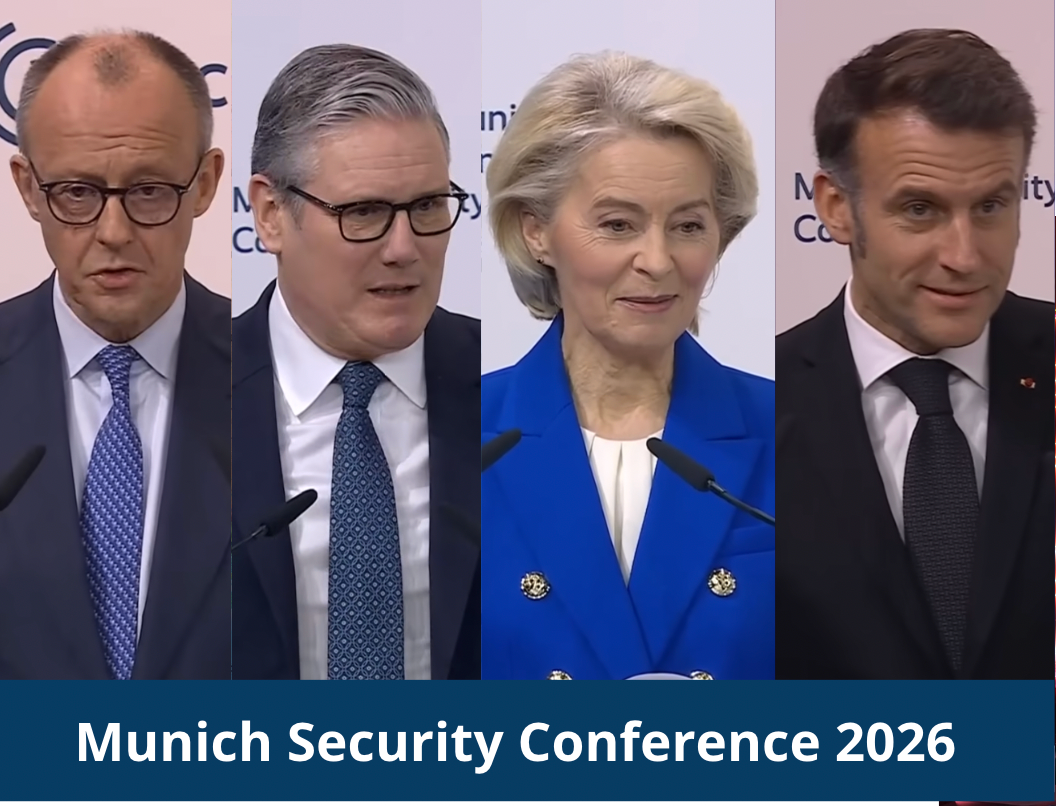
Europe Wakes Up: How Merz, von der Leyen, Starmer, and Macron Are Grasping the New Moment
This article reads the Munich speeches by Chancellor Merz, President von der Leyen, Prime Minister Starmer and President Macron as a single European message on power, industry and security. It shows how all four now treat raw materials, technologies and supply chains as instruments of power, how they link European independence to industrial capacity and…
-
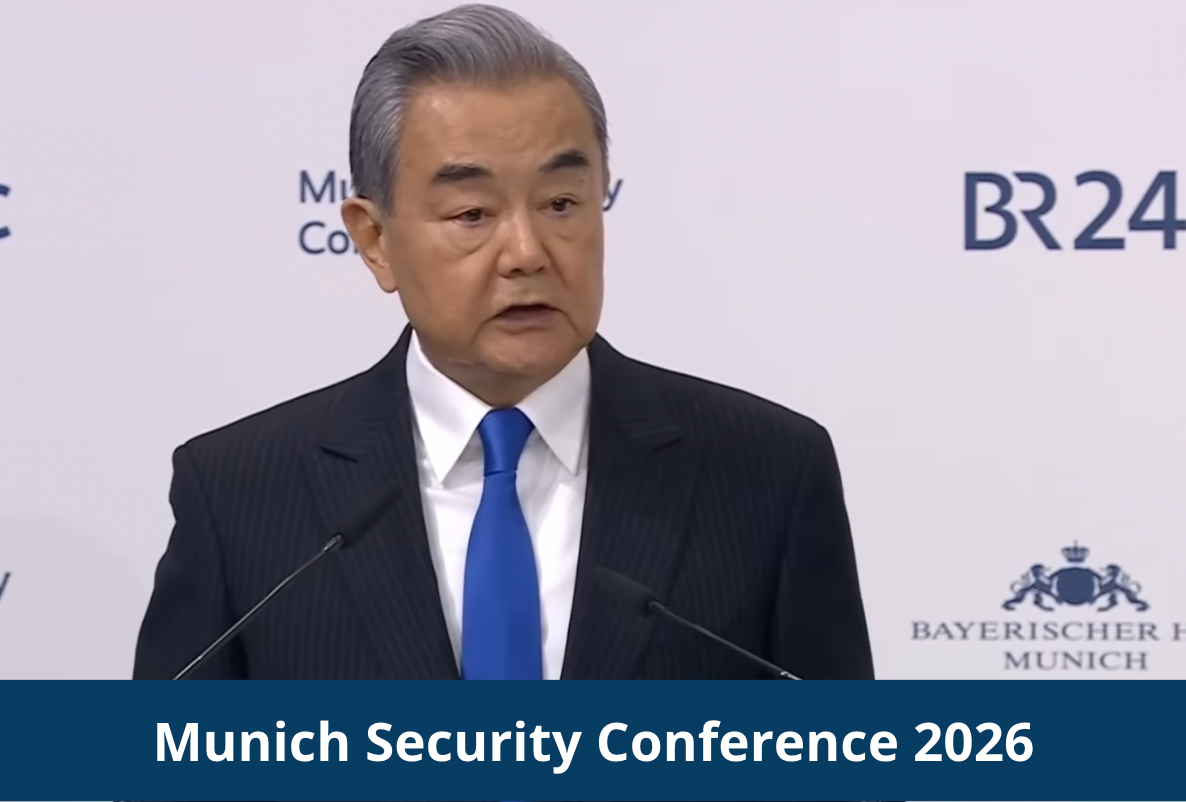
Conversation with China. What Wang Yi’s Munich Speech Signals for Global Governance
Why does Wang Yi’s Conversation with China in Munich matter for anyone working with critical minerals, investment or policy? This article uses his speech to map how China frames global governance today, from the role of the UN and true multilateralism to the rise of the Global South and China-Europe relations, and what that means…
-
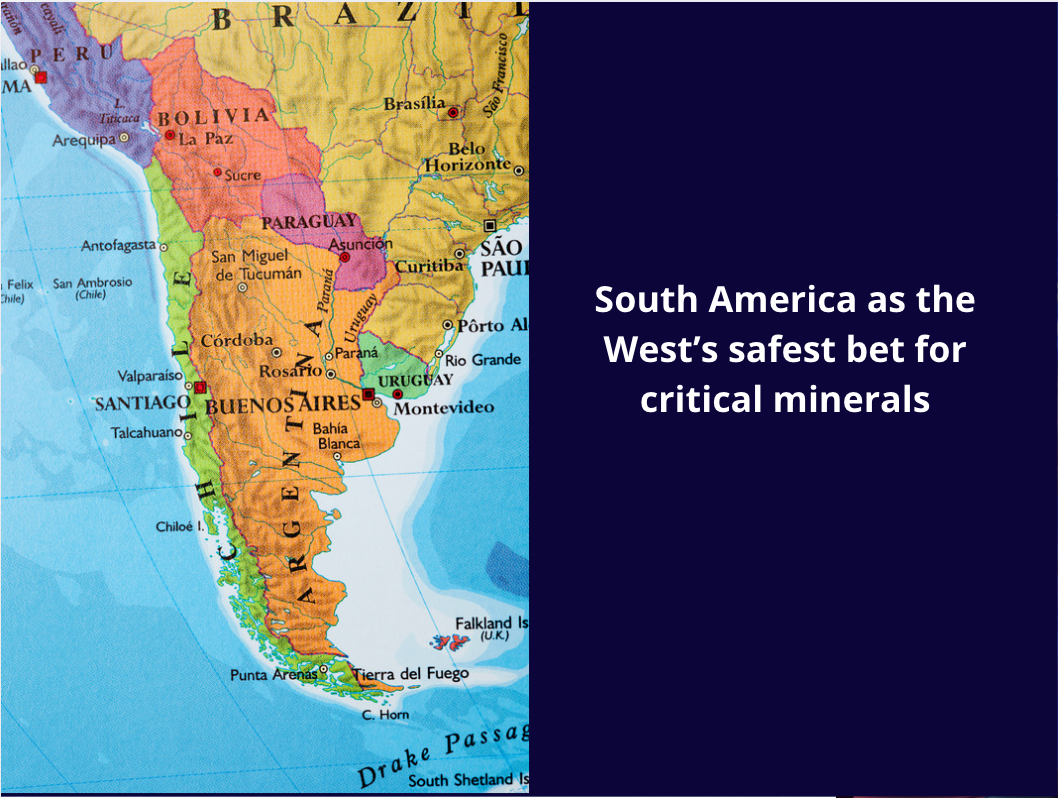
Geopolitical Mining Weekly|Week of 9 – 15 February 2026
This week’s Geopolitical Mining Weekly connects Indonesia’s new state led rare earths strategy, Codelco’s governance response at El Teniente, the Concordia tragedy in Mexico, Verisk Maplecroft’s view of South America as the West’s “safest bet” for critical minerals, and a debate on whether NI 43-101 is still sufficient, to show how system design, governance and…
-
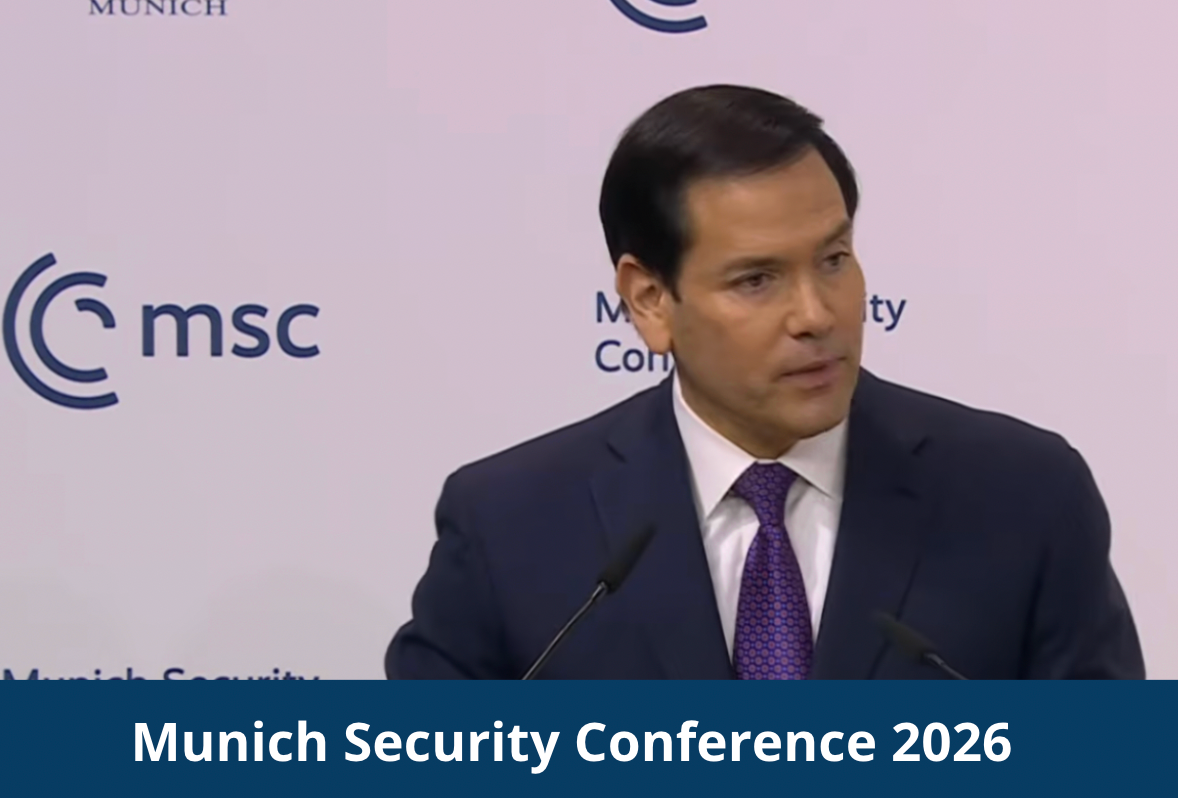
Critical Minerals in Munich, Reading Rubio’s Speech as a Strategic Signal
Why does Rubio’s Munich speech matter if you work with critical minerals, investment or policy? This article uses his remarks to map how the West is now framing deindustrialisation, supply chain sovereignty and the idea of a Western critical minerals chain, and what that could mean for Europe, producing countries and future capital allocation.
-
2026: No Industrial Economy (or Industrial Security) Without Formal Mining and Social Legitimacy
By 2026, the main policy and business forums are aligned on one point: industrial security is no longer just about technology and capital. It also depends on reliable access to critical minerals and on whether formal mining is seen as legitimate by the societies that host it.