
Geopolitical Mining · Weekly
Geopolitical Mining Weekly
Week of April 27–May 3, 2026
Authors: Marta Rivera | Eduardo Zamanillo
May 4, 2026
What this week really tells us
This week’s signals showed how critical minerals strategy is being shaped through the systems that determine whether resources can become investable, permitted, financed, transported, and strategically controlled.
In the United States, federal land access policy moved back into the center of domestic mineral security after H.J. Res. 140 was signed into law, reversing the withdrawal of approximately 225,504 acres of National Forest System lands in northern Minnesota from mineral and geothermal leasing. In Canada, the proposed Canada Strong Fund placed critical minerals inside a wider sovereign capital and nation building framework. In Venezuela, structured offtake arrangements showed how resource diplomacy can operate through sanctions managed commercial channels. In Zambia, KoBold’s Mingomba copper development moved further into the delivery phase. In the deep seabed, NOAA’s process gave seabed minerals a more defined regulatory sequence. And in Greenland and U.S. capital markets, rare earth strategy continued to move through ownership consolidation and public market financing.
Taken together, the week’s coherence is clear: mineral competition is increasingly about building the architecture that can turn deposits into controlled supply. Land access, sovereign finance, offtake structures, permitting tracks, project consolidation, logistics, and capital market visibility are becoming part of the same strategic field.

For the full Geopolitical Mining framework behind this note, see our book Mining Is Dead. Long Live Geopolitical Mining.
Signals of the week
Signal 1: U.S. land access policy is returning to the center of mineral security
What happened
On April 27, 2026, the White House announced that H.J. Res. 140 had been signed into law. The resolution disapproves a 2023 Bureau of Land Management Public Land Order that had withdrawn approximately 225,504 acres of National Forest System lands in Cook, Lake, and Saint Louis Counties, Minnesota, from mineral and geothermal leasing for 20 years.
The House Committee on Natural Resources framed the decision around the Duluth Complex, describing it as a world class mineral deposit containing nearly 8 billion tons of critical minerals. According to the Committee, if developed, the region could represent 95 percent of America’s nickel reserves, 88 percent of its cobalt reserves, one third of its copper reserves, and 75 percent of U.S. platinum group resources. The Committee also clarified that rescinding the withdrawal does not itself mandate a project, but allows the environmental review process to run its course.
The reversal also reopens a highly contested policy space, since the original withdrawal was justified around watershed protection, wilderness values, Tribal and treaty related concerns, and potential adverse effects from mineral and geothermal exploration.
Why it matters
This matters because land access is becoming one of the practical foundations of mineral security. The United States has spent several years articulating the need to reduce dependence on external sources of critical minerals. This week’s signal shows that domestic mineral strategy is also being expressed through federal land decisions, congressional procedure, and the reopening of administrative pathways.
The deeper issue extends beyond whether one project advances. The signal is broader. Strategic mineral policy depends on whether deposits can enter a credible review process. When mineral rich land is structurally removed from the leasing and permitting sequence, the resource remains politically visible but operationally inaccessible. When the land access question is reopened, the resource moves back into the institutional field where geology, environmental review, permitting, litigation, capital, and public legitimacy all interact.
Implications for capital and strategy
For capital, the signal is that U.S. mineral projects should be read not only through geology and commodity exposure, but through land status, federal authority, state permitting, litigation risk, and the durability of political decisions. The reversal does not remove the need for environmental review or state level approvals. It does, however, change the first gate: whether the project can re-enter a reviewable pathway.
For strategy, the deeper message is that domestic mineral security will be shaped by the state’s ability to organize access without bypassing legitimacy. The strongest projects will be those able to combine strategic relevance with environmental credibility, community engagement, and a permitting path that investors can understand.
Signal 2: Canada is placing critical minerals inside sovereign capital strategy
What happened
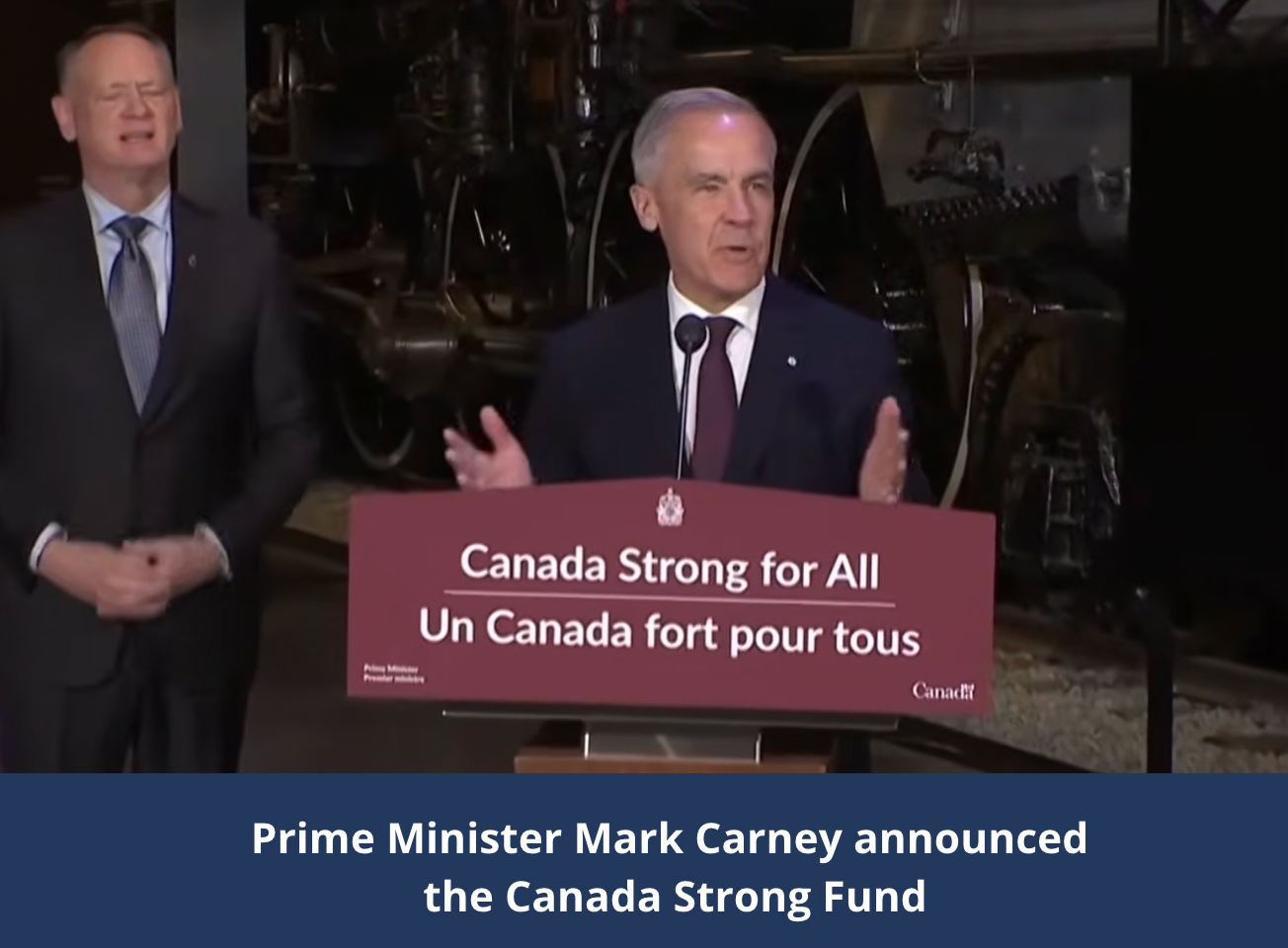
On April 27, 2026, Prime Minister Mark Carney announced the Canada Strong Fund, described by the Prime Minister’s Office as Canada’s first national sovereign wealth fund. The Fund is expected to begin with an initial federal contribution of C$25 billion and invest alongside the private sector in Canadian projects and companies driving economic transformation. The eligible areas named in the announcement include clean and conventional energy, critical minerals, agriculture, and infrastructure.
The announcement also linked the Fund to nation-building projects, including ports, mines, trade and energy corridors, domestic supply chains, and new market access. The Prime Minister’s Office stated that since September 2025, 15 projects had been referred and six transformative strategies were in development by the Major Projects Office across nuclear, LNG, critical minerals such as nickel, graphite and tungsten, and transportation infrastructure, representing more than C$126 billion in investments.
Why it matters
This matters because Canada is moving critical minerals into a broader capital architecture. Critical minerals are not being treated only as an exploration or mining policy file. They are being placed alongside infrastructure, corridors, energy, domestic supply chains, and national investment strategy.
That gives the signal more structural importance. Canada has significant mineral endowment, but the core question is delivery. The challenge is how to move from resources and project lists toward investable systems that connect permitting, Indigenous partnerships, infrastructure, processing, financing, and export access. A sovereign capital vehicle can become important if it helps close the gap between strategic ambition and project execution.
The practical impact will depend on how the Fund’s mandate, governance, investment criteria, and project selection process are defined. For that reason, the announcement should be read as an important state capital signal, but also as an architecture whose strategic weight will be tested through execution.
Implications for capital and strategy
For capital, the signal is that Canada may be moving toward a more coordinated investment framework for strategic projects. If the Fund develops a clear mandate, it could help crowd in private capital, reduce project level uncertainty, and give selected mining and infrastructure assets a stronger national frame.
For strategy, the deeper message is that critical minerals are becoming part of Canada’s state capital model. The strongest signal is not only the C$25 billion figure. It is the way critical minerals are being placed inside a larger concept of national resilience, productivity, infrastructure, and long-term public participation in returns.
Signal 3: Venezuela is testing resource diplomacy through structured offtake
What happened
On May 1, Willkie Farr & Gallagher announced that it is representing Heeney Capital in connection with offtake arrangements and associated investment across Venezuelan bulk commodities and gold projects, in conjunction with Mercuria. According to Willkie, the arrangements are expected to unlock approximately US$2.2 billion in annual mineral export value. The firm also stated that Heeney and Mercuria are focused on developing and investing in Venezuela’s mining sector to strengthen America’s critical materials supply chains, with additional deals in aluminum, nickel, and ferrous products representing a further US$3.0 billion in annual mineral export value, pending regulatory approval.
Willkie also emphasized the sanctions dimension of the transaction, noting that the team had to secure authorizations from the U.S. Department of the Treasury’s Office of Foreign Assets Control under a highly complex Venezuela sanctions framework.
Why it matters
This matters because Venezuela is reappearing in a U.S. supported, Western market mineral access channel through offtake structures rather than conventional project ownership. That distinction is important. In complex jurisdictions, offtake can act as a bridge between diplomacy, compliance, commodity access, and commercial execution.
The signal also shows how sanctions management is becoming part of mineral strategy. Access to resources in high risk jurisdictions increasingly depends on legal architecture as much as on project geology. In this case, the commercial structure, regulatory authorizations, and geopolitical objective are linked. The transaction creates a compliant channel through which mineral value can move.
Implications for capital and strategy
For capital, this signal reinforces the role of traders, specialized investors, and legal structuring in difficult jurisdictions. When direct ownership is too politically or legally complex, offtake can become an intermediate model of access. That model does not eliminate risk. It concentrates risk around sanctions compliance, payment flows, regulatory continuity, and export reliability.
For strategy, the deeper message is that resource diplomacy is becoming more transactional. The question is no longer only which country has the mineral. It is which legal, financial, and commercial structure can make access possible under geopolitical constraint.
Signal 4: KoBold’s Mingomba moves copper development closer to strategic delivery
What happened
Bloomberg reported on April 29 that KoBold Metals officially broke ground on the Mingomba copper mine in Zambia. According to Bloomberg, the project is expected to cost more than US$2.3 billion to build and, at full scale, produce more than 300,000 metric tonnes of copper per year, positioning it among the continent’s top copper sources.
KoBold’s own project page describes Mingomba as one of the best copper deposits the company has found and says the project is being developed in partnership with ZCCM-IH. KoBold also states that it has contributed more than US$200 million to the Zambian economy to date and presents its Zambia operation as combining advanced exploration technology with local talent and suppliers.
Why it matters
This matters because Mingomba is moving from discovery narrative toward project delivery. Copper strategy is often discussed in terms of demand growth, grid expansion, electrification, AI infrastructure, and constrained supply. Mingomba gives that debate a more concrete form: a large scale project, in a major African copper jurisdiction, backed by technology oriented capital and tied to a host country partnership.
The signal is also important because Zambia is becoming more visible inside the Western critical minerals map. The country already sits within the wider logic of the Lobito corridor, copperbelt logistics, and allied infrastructure interest. A project of Mingomba’s scale strengthens the strategic relevance of Zambia not only as a producer, but as a jurisdiction where technology, capital, geology, state participation, and logistics can converge.
Implications for capital and strategy
For capital, Mingomba reinforces the value of high quality copper assets in jurisdictions where geology is strong and where the broader system around the project is becoming more strategically relevant. The project’s future will still depend on execution, infrastructure, power, permitting, cost control, community relationships, and processing/logistics pathways.
For strategy, the deeper message is that copper development is moving into a new category of relevance. Projects like Mingomba are potential anchors in wider systems of electrification, industrial resilience, corridor development, and geopolitical supply diversification.
Signal 5: Deep seabed minerals are entering a more defined U.S. regulatory sequence
What happened
On May 1, The Metals Company announced that NOAA had determined that the consolidated application submitted by its U.S. subsidiary, TMC USA, for an exploration license and commercial recovery permit under the Deep Seabed Hard Mineral Resources Act is in full compliance with the Act and its implementing regulations.
The company stated that the consolidated application covers an exploration and commercial recovery area of approximately 65,000 square kilometers in the Clarion-Clipperton Zone, compared with approximately 25,000 square kilometers in its initial April 2025 commercial recovery permit application. It also said the application includes an estimated resource of 619 million tonnes of wet nodules, with potential exploration upside of an additional 200 million tonnes. The next steps include certification, Federal Register publication, a draft Environmental Impact Statement, public comment, a final EIS, and NOAA’s final determination.
Why it matters
This matters because seabed minerals are moving from strategic debate into procedural sequencing. The sector remains environmentally contested and politically sensitive, but this milestone gives the U.S. pathway a more defined administrative structure. This is a procedural milestone, not a final mining authorization.
The strategic relevance lies in the frontier character of the resource. Polymetallic nodules sit outside the usual land based mining geography and are being framed by the company as potential inputs for energy, defense, manufacturing, and infrastructure. That does not settle the environmental or governance questions. It does, however, show that the minerals security debate is expanding into new jurisdictions, new regulatory models, and new forms of environmental review.
Implications for capital and strategy
For capital, the signal is that regulatory milestones will increasingly shape seabed mineral valuation. The key questions are now procedural and evidentiary: the scope of environmental review, public comment, litigation risk, technology readiness, financing, and the relationship between U.S. permitting and international seabed governance.
For strategy, the deeper message is that mineral security is expanding beyond conventional mining frontiers. The ocean floor is becoming part of the supply chain conversation, and the next phase will test whether the regulatory system can translate strategic interest into a credible, legitimate, and financeable pathway.
Signal 6: Rare earth strategy is moving through ownership consolidation and public-market financing
What happened
On April 27, Critical Metals announced the signing of a letter of intent to acquire all outstanding shares of European Lithium in a proposed transaction valued at approximately US$835 million. The company said the transaction would position Critical Metals to consolidate 100 percent ownership of the Tanbreez Rare Earth Project in Greenland by acquiring European Lithium’s remaining 7.5 percent stake. Critical Metals also stated that the transaction would simplify Tanbreez’s ownership, decision making, and financing strategy as the project advances toward a development decision.
This followed Critical Metals’ April 17 announcement that the Government of Greenland had approved the transfer of the final 50.5 percent interest in Tanbreez, and the company’s April 30 announcement that the transfer had closed, bringing Critical Metals’ ownership to 92.5 percent. European Lithium retains the remaining 7.5 percent interest, which the proposed transaction would consolidate if completed. The proposed transaction remains subject to a definitive agreement, shareholder, court and regulatory approvals, and other customary conditions.
Separately, Rare Earths Americas announced on April 28 the launch of its proposed initial public offering. The company said the offering consists of approximately 2.8 million shares, with an expected price range of US$17 to US$19 per share, and that it intends to list on the NYSE American under the ticker symbol REA. It also stated that proceeds would support land acquisition, drilling, metallurgical work, permitting, S-K 1300 technical report summary preparation, exploration, engineering, and related project development activities across its U.S. and Brazil rare earth portfolio.
Why it matters
This matters because capital structures are becoming part of rare earth strategy alongside policy statements. Greenland, heavy rare earths, ownership consolidation, public float, balance sheet strength, IPO proceeds, and project financing are becoming part of the Western rare earth response.
The signal is especially important because heavy rare earths remain one of the most difficult parts of the critical minerals system to diversify. Deposits alone are not enough. The strategic challenge is to move from geological relevance to ownership clarity, technical validation, financing capacity, processing pathways, offtake, and credible development schedules.
Implications for capital and strategy
For capital, the signal is that rare earth projects are being reorganized around market access and financing visibility. Consolidated ownership can reduce structural complexity, improve decision making, and make strategic investors more comfortable. Public listings and IPOs can bring visibility and capital, but they also increase the need for disciplined technical disclosure and execution.
For strategy, the deeper message is that rare earth diversification is becoming more financialized. Western governments can identify rare earths as strategic, but the projects still need vehicles capable of raising capital, consolidating assets, advancing permitting, and connecting to downstream demand. This week showed that part of that architecture is now being built through corporate transactions and public market structures.
Signals to watch
- Whether the Minnesota land access reversal leads to a clearer permitting path, or whether state-level approvals, litigation, and public legitimacy become the more decisive constraints.
- Whether Canada’s Canada Strong Fund develops a clear investment mandate for critical minerals, infrastructure, processing, and strategic supply chains.
- Whether Venezuela’s offtake arrangements translate into sustained export flows under a stable compliance framework.
- Whether Mingomba strengthens Zambia’s position as a copper anchor within wider corridor, logistics, and industrial development strategy.
- Whether NOAA’s process for TMC USA produces a credible environmental review sequence that can withstand public scrutiny and governance challenges.
- Whether rare earth consolidation and IPO activity can move beyond strategic narrative into technical execution, financing, processing, and offtake.
Three strategic questions for this week
- Which jurisdictions are turning mineral access into a more structured state capital instrument?
- Which projects are becoming more investable because the institutional system around them is getting clearer?
- Where is mineral strategy moving beyond policy language into land access, sovereign finance, permitting, offtake, infrastructure, and capital-market execution?
Resources
Signal 1
- The White House — Congressional Bill H.J.Res. 140 Signed into Law
- House Committee on Natural Resources — President Trump Signs Legislation to Overturn Minnesota Mining Ban
Signal 2
Signal 3
Signal 4
- Bloomberg — Altman-Backed KoBold Starts Work on Zambia’s Top Copper Mine
- KoBold Metals — Mingomba Project
Signal 5
Signal 6