
Geopolitical Mining · Country & Region Analysis
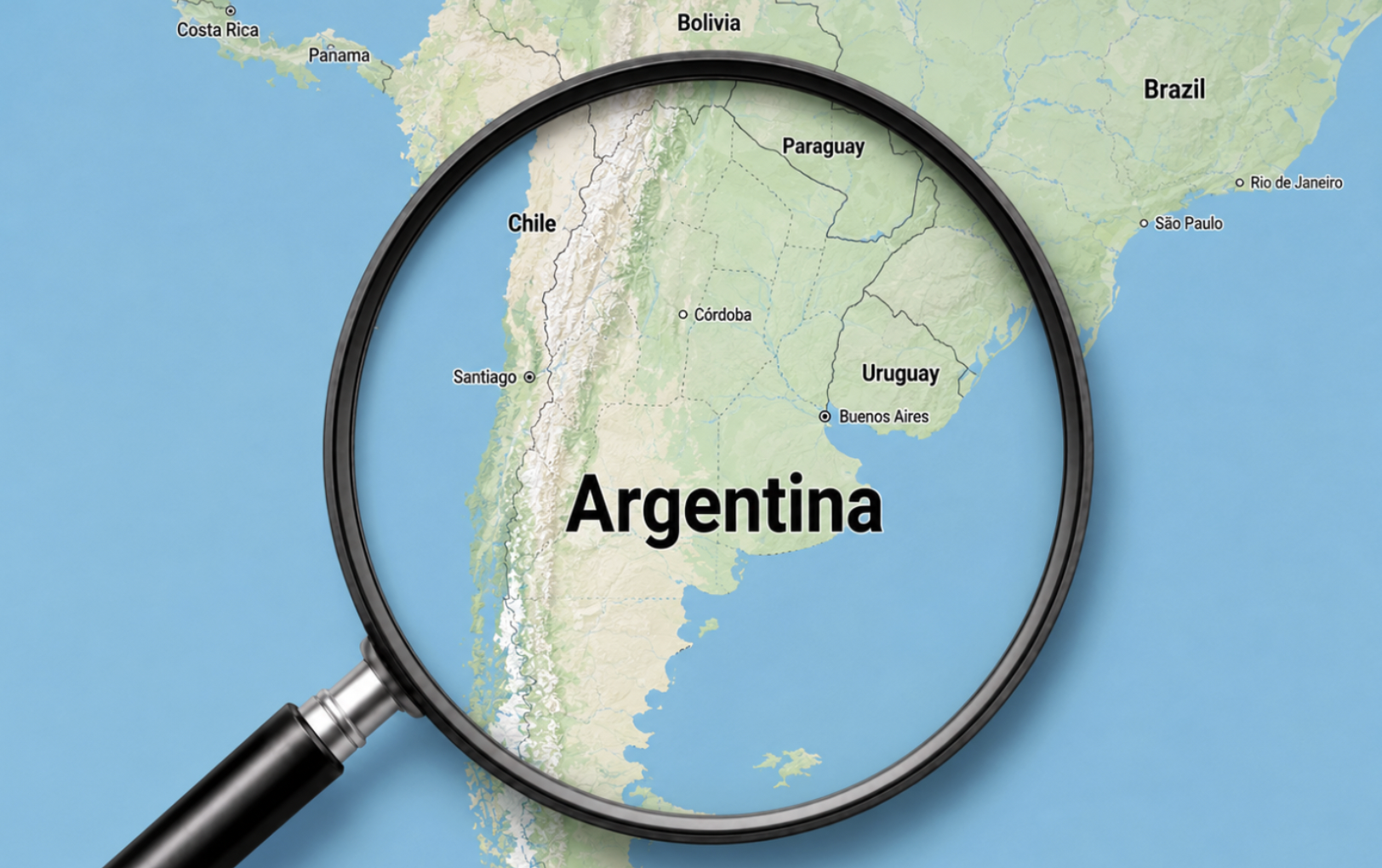
Argentina: From RIGI to Mineral Power
How capital activation, federal execution and legitimacy could reshape Argentina’s place in the new mineral order
By Marta Rivera & Eduardo Zamanillo
July 11, 2026
Brazil and Saudi Arabia show two different ways in which mineral power can be built. Brazil’s niobium position emerged through private industrial execution: Araxá provided the geological base, while CBMM built processing depth, technical trust, customer education, application development and a global market around one mineral. Saudi Arabia’s mineral strategy follows a different logic, using Vision 2030, Ma’aden, sovereign capital, logistics, energy and international convening power to place mining inside a broader national transformation agenda.
Argentina adds a third model. Its mineral strategy is being built around capital activation: the conversion of geological potential into committed investment through a stronger legal, tax, customs and foreign exchange framework for large projects. The Régimen de Incentivo para Grandes Inversiones, or RIGI, gives that strategy its institutional centre. It rebuilds the confidence architecture around long duration capital and offers mining investors a more stable basis for evaluating projects that require years of construction, operation and payback.
Argentina’s case brings those factors together. The country has resources, advanced projects, a new investment regime and a federal constitutional structure in which provinces own the natural resources. It is building stronger links with the United States around critical minerals while managing territorial debates around water, glaciers, Indigenous rights, provincial authority and environmental review. Its export base is expanding from a foundation still led by gold and lithium. The opportunity is large because geology, capital policy, federal execution and strategic alignment are now moving at the same time.
Argentina’s strategic task is to convert geological potential into a full chain of mineral power: legal stability into financed projects, financed projects into construction, construction into production, production into exports, and exports into domestic capability, provincial development and durable legitimacy.
RIGI can activate capital. Mineral power begins when that capital becomes governed production.
For the full Geopolitical Mining framework behind this article, see our book Mining Is Dead. Long Live Geopolitical Mining.
I. The capital factor
RIGI is designed around a clear investment premise: large projects in Argentina can attract more capital when predictability is embedded in the legal, fiscal, customs and foreign-exchange framework from the beginning.
Law 27.742 created RIGI as a regime for vehicles holding a single project, granting incentives, legal certainty, stability and protection of acquired rights. The law applies across Argentina to sectors including mining, infrastructure, energy, oil and gas, steel, technology, tourism and forestry. It requires projects to operate through a Vehículo de Proyecto Único, or VPU, whose exclusive purpose is to carry out one or more phases of the approved project.
The general minimum investment threshold is US$200 million in computable assets, although the Executive may establish higher thresholds by sector, subsector or productive stage. Long Term Strategic Export Projects are subject to a different logic: they may involve successive stages, with each stage requiring investment in computable assets of at least US$1 billion. The regime also requires the investor to complete a minimum percentage of investment during the first two years after approval, generally at least 40% of the minimum investment amount, with limited scope for reduction in exceptional cases.
This structure gives RIGI two levels of ambition. The US$200 million threshold creates a general entry gate for large investments, while the staged requirements for Long Term Strategic Export Projects create a higher category for projects intended to position Argentina as a long term supplier in global markets where the country is still building relevant participation.
The benefits address the precise frictions that have historically affected Argentina’s investment reputation. For VPUs admitted to the regime, the corporate income tax rate is set at 25%, accelerated depreciation is available, and imports of new capital goods, spare parts, components and certain project related goods are exempt from import duties, the statistical fee and related tax collection mechanisms. Exports from the promoted project become exempt from export duties after three years for standard projects and after two years for Long Term Strategic Export Projects.
The foreign exchange benefits are equally central. Export proceeds are progressively exempted from mandatory settlement in the local foreign exchange market, reaching 100% after four years for standard projects and after three years for Long Term Strategic Export Projects, counted from the project’s puesta en marcha. RIGI also grants stability in tax, customs, foreign exchange and regulatory matters for 30 years from adhesion, with special rules for successive stages of Long Term Strategic Export Projects.
The confidence architecture also includes enforcement. RIGI provides that disputes between the State and an admitted VPU should first be addressed through amicable consultations and negotiations. If the dispute is unresolved, the VPU, or in certain cases its foreign shareholders, may submit the dispute to arbitration under the PCA Arbitration Rules, the ICC Arbitration Rules or ICSID, depending on the applicable option. Long duration mining capital evaluates incentives together with the remedies that make the stability package credible.
This is the core of Argentina’s model. The country is turning legal and macroeconomic predictability into a productive asset. In mining, that asset matters because capital is large, payback is long and the orebody is fixed in the jurisdiction for the life of the project.
The early official numbers show that the regime has changed the investment conversation. In June 2026, Argentina’s Ministry of Economy launched a public RIGI platform reporting 16 approved projects, US$29.892 billion in investment and 54,495 direct and indirect jobs associated with those approved projects. The same platform reported 25 projects under evaluation, representing US$111.037 billion in proposed investment and 142,168 estimated direct and indirect jobs.
In mining, the government presented an even more direct signal at PDAC 2026: six mining projects approved under RIGI, twelve more under evaluation and a combined mining investment pipeline of US$47 billion between the two groups.
Those figures mark the activation phase. Argentina has created a legal and financial channel through which projects can enter a stronger investment conversation. The next stage is the movement of approved and under review projects into financing, permits, construction, commissioning, production and sustained exports.
II. The mineral base
Argentina’s current mining economy is already expanding, and its structure shows the next space for strategic growth between export performance and full mineral power.
Official data show that mining exports reached US$6.037 billion in 2025, the highest value in the country’s mining history and 29.2% above the previous year. Metallic minerals accounted for US$4.948 billion, or 82% of sector exports. Gold alone contributed US$4.078 billion, while lithium reached US$905 million and represented 15% of total mining exports. The government linked the lithium performance to the start up of four lithium projects between 2024 and 2025, bringing Argentina to seven lithium mines in production.
This export base is significant. It also shows where Argentina stands today. Gold provides the dominant export revenue. Lithium is rising quickly and has already changed the country’s position in battery-material conversations. Copper remains a major future story, with a portfolio of projects that could reposition Argentina within the Andean copper system if they move from studies and approvals into construction and production.
The Mesa del Cobre reflects that ambition. The national government identified San Juan, Catamarca, Salta, Mendoza and Jujuy as the provinces represented in the copper table, with companies linked to projects such as Josemaría, MARA, Los Azules, Filo del Sol, El Pachón, Altar, San Jorge and Taca Taca. The government stated that, if this project portfolio materialises, Argentina could position itself among the world’s top ten copper producers.
The country’s mineral future is therefore more diversified than its current export base. RIGI is being built at the moment when Argentina’s lithium system is expanding and its copper pipeline is trying to cross into a new phase. This timing is important. A capital regime has greater strategic effect when it meets projects that are already technically advanced enough to respond.
Mendoza’s December 2025 approval of the Environmental Impact Declaration for PSJ Cobre Mendocino illustrates this transition. The national government described the approval as the first large-scale metalliferous development to receive legislative clearance in Mendoza in more than two decades. The project was presented with projected initial investment of US$600 million and average annual production of 40,000 tonnes of fine copper.
That wording is important. The official reference to cobre fino is best rendered in English as fine copper or contained copper. This precision keeps the mining analysis clear by distinguishing mine output, concentrate, metal content and refined product. Argentina’s mineral base is therefore entering a conversion phase. Lithium is already contributing materially to exports. Gold remains the current revenue anchor. Copper carries the largest strategic optionality, and the new capital framework can help move the copper portfolio from national ambition into operating supply.
III. The geopolitical factor
Argentina’s mining acceleration is occurring inside a wider geopolitical movement. In August 2024, Argentina and the United States signed a memorandum of understanding on critical minerals cooperation. The purpose of the MOU was to strengthen cooperation on critical mineral supply chains and promote trade and investment in exploration, extraction, processing, refining, recycling and recovery, while identifying potential co-financing opportunities for critical mineral investments.
That alignment deepened through the U.S.–Argentina Agreement on Reciprocal Trade and Investment, signed in February 2026. The agreement includes provisions under which Argentina is to allow and facilitate U.S. investment in exploration, mining, extraction, refining, processing, transport, distribution and export of critical minerals and energy resources, as well as related infrastructure and services. Geopolitical Mining’s earlier analysis of the U.S.–Argentina critical minerals package described the move as a country-specific lane within the emerging U.S. critical minerals architecture. It noted that the arrangement connects investment access, public-finance pathways and security alignment, while explicitly naming copper, lithium and other critical minerals.
Argentina is being read internationally as a jurisdiction where geology, investment reform and strategic alignment are arriving together. The U.S. lane is one important part of that position, while the wider mineral model remains open to multiple partners, sources of capital and forms of project execution. Argentina’s mineral diplomacy will remain multivector. The country’s mining sector involves North American, Chinese, European, Australian, regional and domestic actors across capital, offtake, technology, project execution and infrastructure. Argentina and Chile have also moved to strengthen mining integration, with official discussions in 2026 highlighting opportunities in lithium, copper and regional strategic cooperation.
This broader diplomatic position matters. U.S. alignment strengthens one strategic lane for Argentina, especially in a world where supply security, financing instruments, export controls and investment screening are increasingly connected. Argentina’s long-term mineral role will be strongest when it hosts multiple forms of capital and partnership with coherence, transparency and strategic direction. The geopolitical value of RIGI is therefore broader than tax stability. It gives Argentina a way to present itself as an executable jurisdiction within a world in which allied supply chains, public finance, offtake, export controls, infrastructure and mineral security are becoming part of the same conversation.
IV. The federal factor
Argentina’s capital regime must operate through a federal mining reality. Article 124 of the Argentine Constitution establishes that the provinces hold the original ownership of the natural resources existing within their territory. Article 41 establishes the right to a healthy, balanced environment and recognises the national role in minimum environmental standards, while the provinces retain complementary powers. Article 75, subsection 17 recognises the ethnic and cultural pre-existence of Indigenous peoples and assures their participation in the management of their natural resources and other interests affecting them.
These constitutional provisions make Argentina’s mining model structurally federal. The national government can create RIGI, negotiate international frameworks, promote strategic investment and define a national direction. Provinces remain central to mineral rights, local permitting, environmental review, project politics and territorial relationships. That federal structure can become a strength when provinces build specialised mining identities, compete for investment and align local development with geological opportunity. Its full value will emerge as national capital activation advances together with provincial institutional capacity, infrastructure, environmental review and local legitimacy.
Mendoza’s PSJ Cobre Mendocino case matters for exactly that reason. It shows how national mining ambition becomes real through provincial political and institutional processes. RIGI can improve the capital frame, while provincial institutions give the project its territorial pathway. Argentina’s mining model will mature as national stability and provincial execution reinforce one another. The country’s advantage lies partly in the diversity of its provincial mining map and in the ability to make that diversity legible to global capital while preserving the local authority that gives projects durability. Federalism is the operating system through which Argentine mining becomes legitimate and executable.
V. The institutional factor
RIGI has created a capital channel. Argentina’s next institutional opportunity is to move public execution with the same sophistication as the capital it wants to attract. The regulatory decree for RIGI states that the regime is intended to create the predictability, stability and competitiveness necessary to attract large investments, particularly in sectors with capital intensity and long recovery periods. It also frames the regime as a tool to help Argentina become again a global supplier of goods and services under competitive conditions.
That ambition brings institutional demands. Large mining projects require more than fiscal incentives. They require functioning cadastres, geological information, environmental assessment, water governance, infrastructure planning, customs, tax administration, security coordination, local suppliers, labour training and closure oversight. RIGI sits within a broader mining policy architecture. In June 2026, the government also updated and simplified the regulatory framework for the Mining Investment Law through Decree 482/2026. The government described the update as modernising administrative procedures, incorporating digital tools, reducing bureaucratic burdens, streamlining imports, optimising VAT refund mechanisms, clarifying fiscal stability implementation and introducing the option of environmental insurance as an external guarantee mechanism.
The relationship between these instruments gives the model depth. RIGI improves the macro-contract with investors, while the broader mining investment framework shapes the administrative environment in which projects operate. A clearer and more capable ordinary mining framework strengthens the conversion from approval to execution. The supplier agenda is also central. RIGI’s legal framework expressly identifies the development of local production chains associated with RIGI projects as one of the regime’s objectives, while the law protects the ability of provinces and the City of Buenos Aires to foster local-supplier policies under market conditions.
The supplier register can become an industrial instrument. It is one of the places where Argentina’s capital-activation model can begin to generate domestic capability, connecting large projects with local engineering, logistics, maintenance, construction, environmental services, monitoring, technology and professional training. Infrastructure is equally central. RIGI improves the financial conditions of a project, while power lines, roads, water systems, rail corridors, ports, customs capacity and high altitude logistics determine how that project moves into execution. Argentina’s capital stability model becomes more powerful when project approvals are matched by infrastructure planning at the same speed and quality.
This is where the institutional factor becomes decisive. A country can activate capital quickly, and durable execution requires public and private capabilities that allow projects to advance. Mining needs speed supported by institutions. Argentina’s institutional challenge is to convert RIGI from a regime into a delivery system.
VI. The security factor
One of the most revealing developments around RIGI is the creation of a federal security coordination table for strategic investments. Resolution 461/2026 of the Ministry of National Security created a permanent coordination table for strategic investments under RIGI. The resolution treats RIGI projects as systems involving critical infrastructure, complex supply chains and significant flows of capital, goods and people. It identifies risks associated with organised crime, narcotrafficking, criminal infiltration, logistics, critical infrastructure and strategic production environments.
This is a significant signal. Argentina is beginning to treat major investment projects as systems of capital, infrastructure, logistics, territory and security. That aligns directly with the geopolitical mining era, where formal mining must be protected from ordinary project risk, criminal infiltration, logistical disruption, illicit flows and institutional fragility. Security can strengthen the model when it is handled with precision. Strategic mining projects need protection, traceability and operational continuity, together with territorial trust. The strongest security architecture protects formal investment, logistics, workers and communities against organised crime and illicit flows while preserving legitimate social disagreement, Indigenous participation and environmental scrutiny as part of democratic governance.
The stronger version of Argentina’s security approach would connect intelligence, logistics, anti-corruption, traceability, infrastructure protection and community accountability within one coherent framework. Mineral security protects more than assets. It protects the conditions that allow formal mining to remain legal, accountable, traceable and socially governable.
VII. The legitimacy factor
Argentina’s mining expansion will be decided partly through law, finance and geopolitics. It will also be decided through legitimacy. Geopolitical Mining’s legitimacy framework distinguishes social legitimacy from territorial legitimacy. Social legitimacy concerns whether mining can be understood as part of national development, security, infrastructure and the material economy. Territorial legitimacy is built in the specific places where projects operate, through water, land, employment, environmental performance, community relationships, Indigenous rights, local history, benefit sharing, institutional accountability and the everyday conduct of companies and the State.
Argentina needs both. Nationally, mining is being presented as a source of exports, foreign exchange, strategic supply, employment and regional development. Territorially, projects will be judged through provincial processes, water use, glacier and periglacial concerns, Indigenous participation, environmental monitoring, local procurement and the credibility of institutions. The glacier law reform shows how sensitive this legitimacy factor has become. In April 2026, Argentina’s Congress approved changes to Law 26.639 on minimum standards for the protection of glaciers and the periglacial environment. The reform was later published as Law 27.804. The government presented the reform as a way to clarify the scope of protection, strengthen provincial authority and reconcile environmental protection with the development of copper and lithium potential.
The reform also became judicially and socially contested. Environmental organisations and civil society groups presented collective legal actions challenging the reform and seeking its suspension, arguing that it weakened protections for glaciers and periglacial environments.
The issue illustrates a central requirement of Argentina’s mineral model: legal stability for capital must be matched by scientific credibility, environmental confidence and territorial legitimacy. A reform that unlocks investment gains durability when it also sustains public trust. Argentina’s strongest path connects mineral development with environmental responsibility through institutional quality. Scientific evidence, provincial authority, environmental monitoring, public explanation, judicial review and community participation all become part of the durability of the mining model. Indigenous rights are part of that legitimacy architecture. In Argentina, territorial legitimacy requires attention to the constitutional recognition of Indigenous peoples and their participation in the management of natural resources and other interests affecting them. That principle belongs to Argentina’s own constitutional structure.
RIGI can protect investors against certain policy changes. Territorial legitimacy gives that stability a social foundation. Long term statutory protection becomes stronger when communities experience the project as transparent, accountable and connected to local benefits. Argentina’s mineral model will gain durability when social legitimacy and territorial legitimacy begin to move together: when citizens understand why formal mining matters to the country, and when communities can see that formal mining is governed credibly where they live.
VIII. From activation to conversion
Argentina’s mining moment can be read through two connected phases: activation and conversion. Activation occurs when a project enters a more favourable investment conversation. RIGI approvals, project pipelines, fiscal stability, exchange benefits, investment missions and international agreements all belong to this phase. They change the probability that capital will look seriously at Argentina. Conversion is the discipline that turns that conversation into mineral power. It occurs when approved projects secure financing, complete provincial and environmental approvals, award major contracts, begin construction, manage interfaces, commission infrastructure, reach commercial production, export consistently and build domestic capability around the mine.
Argentina’s next measure of progress will be the movement of RIGI projects across the full chain from approval to operating supply. An approved project confirms entry into the regime. Financial close confirms confidence by capital providers. Provincial permits and environmental approvals confirm institutional and territorial execution. EPC, EPCM and major contract awards confirm readiness to build. Construction converts pipeline into real capex. Commissioning demonstrates operational capacity. Commercial production converts the project into supply. Sustained exports contribute to mineral power. Integrated local suppliers show that capital activation is generating domestic industrial capability around the mine.
This conversion lens strengthens Argentina’s story because it keeps the argument disciplined and forward-looking. The country has built a legal and financial platform through which mineral power can become possible as projects advance into financing, construction, production, exports and domestic capability. RIGI is the first stage of that process.
IX. The symbolic factor
RIGI also carries a symbolic message. For decades, Argentina has often been discussed internationally through the language of macroeconomic instability, capital controls, policy reversals and unrealised potential. RIGI is an attempt to change that narrative. It says that Argentina wants to be read again as a country capable of hosting very large, long term, export oriented projects. That symbolic repositioning matters because mining investment depends heavily on narrative credibility. Investors finance jurisdictions as much as deposits. Buyers sign long term agreements with projects whose political and institutional context they believe can hold. Governments enter strategic partnerships with countries they see as capable of delivering.
Argentina is trying to recode its mining sector within the new mineral order: from latent geological potential to executable strategic supply. This symbolic shift becomes stronger as projects are delivered. RIGI announces a new seriousness. Construction proves it. Exports deepen it. Provincial alignment stabilises it. Legitimacy makes it socially believable. The symbolic factor is therefore inseparable from execution. Argentina’s new mining narrative will be credible when the country can show that capital activation leads to operating mines, stronger provinces, better infrastructure, governed territories and more domestic capability.
X. What Argentina is building
Argentina adds a third model alongside Brazil and Saudi Arabia. Brazil built mineral power around an industrial champion that made niobium useful to global customers. Saudi Arabia is building a state led platform that places mining inside sovereign capital, industrial diversification and geopolitical convening. Argentina is building a capital stability model inside a federal country with significant geology and a renewed investment framework.
That model has real advantages. It is attractive to private capital. It fits the global search for copper and lithium supply. It connects to U.S. critical minerals alignment without necessarily excluding other partners. It can operate across several provinces and commodities. It allows Argentina to position itself as a country where large projects can be structured under a special legal and financial architecture. The model’s performance will depend on the quality of coordination. Capital can enter the regime quickly, while permits, infrastructure, communities and institutions must advance with the same discipline. Federal diversity can produce depth when execution standards become clear across provinces. Geopolitical alignment can attract investment while raising expectations about traceability, security and strategic reliability. The symbolic promise of national renewal becomes durable when territorial realities are governed carefully.
Argentina is therefore building a model whose strength will depend on translation. Legal stability must translate into financing. Financing must translate into construction. Construction must translate into exports, jobs, suppliers and provincial development. Strategic alignment must translate into actual projects. National narrative must translate into territorial legitimacy. The country’s strongest path is to present RIGI as the first layer of a broader conversion system: capital stability, federal execution, infrastructure coordination, institutional capacity, security, supplier development and legitimacy. That is how mineral power is built above ground.
Conclusion
RIGI is Argentina’s attempt to turn geological potential into capital confidence. The regime has already changed the investment conversation. Official data show tens of billions of dollars in approved and pending projects, while mining has become one of the most visible sectors moving through the framework. Export performance reached a historical high in 2025, lithium production is expanding and copper projects are moving closer to the centre of national strategy.
The decisive phase now belongs to execution. Argentina’s place in the new mineral order will be shaped by the interaction of five factors: capital stability, federal coordination, geopolitical alignment, institutional capacity and legitimacy. RIGI addresses the first with unusual force, while the full interaction among all five will determine the scale and durability of Argentina’s mineral power. Brazil’s niobium position was built above ground through industrial execution. Saudi Arabia’s mineral platform is being built through sovereign strategy and capital. Argentina’s opportunity is to show that a country with a complex federal system and a difficult macroeconomic history can use legal stability to bring capital back into mining, then convert that capital into governed production. RIGI opens the door to a new investment phase. Argentina’s mineral power will be built through what follows: financed projects, provincial execution, infrastructure, domestic capability and territorial legitimacy.
RIGI activates capital. Argentina’s mineral power will depend on the country’s ability to convert that capital into governed production, industrial capability and durable territorial legitimacy.
Resources
External references
Argentina, Law 27.742, Régimen de Incentivo para Grandes Inversiones, RIGI.
Argentina, Decree 749/2024, RIGI regulatory framework.
Argentina Ministry of Economy, official RIGI project platform, June 2026.
Argentina Ministry of Economy, PDAC 2026 mining presentation.
Argentina Ministry of Economy, official mining export data for 2025.
Argentina Ministry of Economy, Mesa del Cobre.
Argentina Ministry of Economy, PSJ Cobre Mendocino approval.
Argentina Ministry of Economy, Decree 482/2026 and Mining Investment Law update.
Argentina National Constitution, Article 41.
Argentina National Constitution, Article 75(17).
Argentina National Constitution, Article 124.
Argentina, Law 27.804 on glaciers and the periglacial environment.
FARN, collective legal challenge concerning the glacier-law reform.
Argentina Ministry of Economy, Argentina and Chile strengthen strategic mining integration.
Related Geopolitical Mining analysis
Rivera Muñoz, Marta, and Eduardo Zamanillo. Mining Is Dead. Long Live Geopolitical Mining.