
Geopolitical Mining · Weekly
Geopolitical Mining Weekly
Week of March 23-29, 2026
Authors: Marta Rivera | Eduardo Zamanillo
What this week really tells us
This week, five developments showed that critical mineral security is increasingly being built through physical plants, state backed equity, sanctions flexibility, trade architecture, and war driven cost pressure. EnergyX commissioned its first U.S. direct lithium extraction production plant in Texas. DFC opened a pathway to a strategic equity position in Syrah, linking Mozambique’s Balama graphite mine with Louisiana’s Vidalia anode facility. OFAC issued new Venezuela related general licenses covering minerals activities and contingent investment contracts. Australia and the European Union concluded a trade agreement that explicitly supports critical minerals supply chain diversification. And Codelco warned that war related disruptions could raise its copper production costs.
The common pattern is clear. This was not a week of broad strategy language. It was a week of instruments. A demonstration plant, a proposed debt for equity swap, new sanctions licenses, tariff elimination, and a quantified cost estimate all point to the same underlying shift: critical minerals are increasingly being governed through the mechanisms that determine whether supply can actually be built, financed, moved, and sustained.
A second point matters just as much. The economics of security are becoming more visible. EnergyX and Syrah both show how the U.S. is trying to secure midstream and processing capability, not only access to ore. The Australia-EU agreement adds a trade lane dimension built around diversification and predictability. And the Codelco estimate is a reminder that geopolitical shocks now reach directly into the cost curve of the world’s most strategic industrial metals.
For boards and investors, the question is less whether critical minerals remain strategic, and more which assets sit inside the lanes now forming around domestic processing, state backed financing, sanctions flexibility, diversified trade architecture, and more volatile input cost assumptions.

For private decision support on project, jurisdiction or capital questions, Geopolitical Mining Advisory applies a Systemic Mining Viability lens to assess whether a mining opportunity can become credible, legitimate and financeable before full due diligence begins.
Signals of the week
Signal 1: EnergyX turns U.S. lithium strategy into a physical plant
a) What happened
On March 25, EnergyX announced the commissioning of Project Lonestar™, a 250 ton direct lithium extraction production plant on U.S. soil. The company described it as the largest DLE lithium production plant in the United States and the first DLE facility in Texas processing locally sourced Smackover brine. EnergyX also says Project Lonestar is its first major U.S. lithium project, that it has built a US$30 million demonstration plant with a US$5 million DOE contribution, and that the broader project targets 50,000 tpa LCE across two phases.
b) Why it matters
This matters because it moves the U.S. lithium story beyond acreage and into processing validation. The key signal is not only that DLE capacity is being built, but that it is being tested on local brine in a domestic setting and framed as part of a secure battery materials ecosystem. In other words, it is an attempt to solve a conversion and refining gap, not just a resource access problem.
c) Implications for capital and strategy
For investors and boards, this implies that U.S. lithium projects should increasingly be evaluated through processing readiness and demonstrated conversion capability, not only through resource narratives. In this segment, technical validation on domestic feedstock may become a more important value driver than early stage acreage alone.
Signal 2: DFC moves toward strategic equity in Syrah’s mine to anode chain
a) What happened
On March 25, America’s Development Finance Institution (DFC) announced a pathway to secure a strategic equity interest in Syrah, owner of the Balama graphite mine in Mozambique and the Vidalia anode material plant in Louisiana. The agency said the proposed transaction would provide additional liquidity and position Syrah for long term success while supporting critical minerals and integrated supply chains for the United States and its allies. Syrah then announced a fully underwritten A$104 million equity raising and said that, under the strategic funding proposals, DFC would have an approximately 20% shareholding upon completion, with proceeds used primarily to ramp up Balama and fund Vidalia working capital to achieve commercial sales.
b) Why it matters
This is a strong signal because it shows the U.S. moving more directly into ownership and balance sheet shaping, not only loans or grants. The strategic value lies in the integrated structure: Balama as major exChina graphite feedstock and Vidalia as a U.S. anode processing asset. That makes this more than a financing story. It is a mine to midstream supply chain intervention.
c) Implications for capital and strategy
For investors and boards, this implies that graphite and anode projects tied to U.S. industrial priorities may increasingly attract blended public private capital in forms that go beyond conventional project finance. Strategic alignment can now shape ownership, governance, and timing.
Signal 3: OFAC makes Venezuela’s minerals sector more activity specific
a) What happened
On March 27, The Department of the Treasury’s Office of Foreign Assets Control (OFAC) issued new and amended Venezuela related general licenses. The measures include General License 51A authorizing certain activities involving Venezuelan origin minerals, including gold; General License 54 authorizing the supply of certain items and services for minerals operations in Venezuela; and General License 55 authorizing negotiations of and entry into contingent contracts for certain investment in Venezuela’s minerals sector.
b) Why it matters
This matters because it shows minerals being treated as a distinct and more targeted lane within the sanctions architecture. It does not amount to a broad reopening, but it does indicate that the U.S. is willing to create more differentiated legal pathways around mining activity and potential investment. In geopolitical mining terms, that is a meaningful shift: sanctioned jurisdictions are not just “closed” or “open”; they can become selectively accessible by mineral, activity, and contractual structure.
c) Implications for capital and strategy
For investors and boards, this implies that jurisdictional risk in sanctioned mineral provinces may become more granular and more dynamic. Legal flexibility may expand in narrow corridors before political normalization occurs, which makes policy monitoring and transaction design more important than headline country narratives alone.
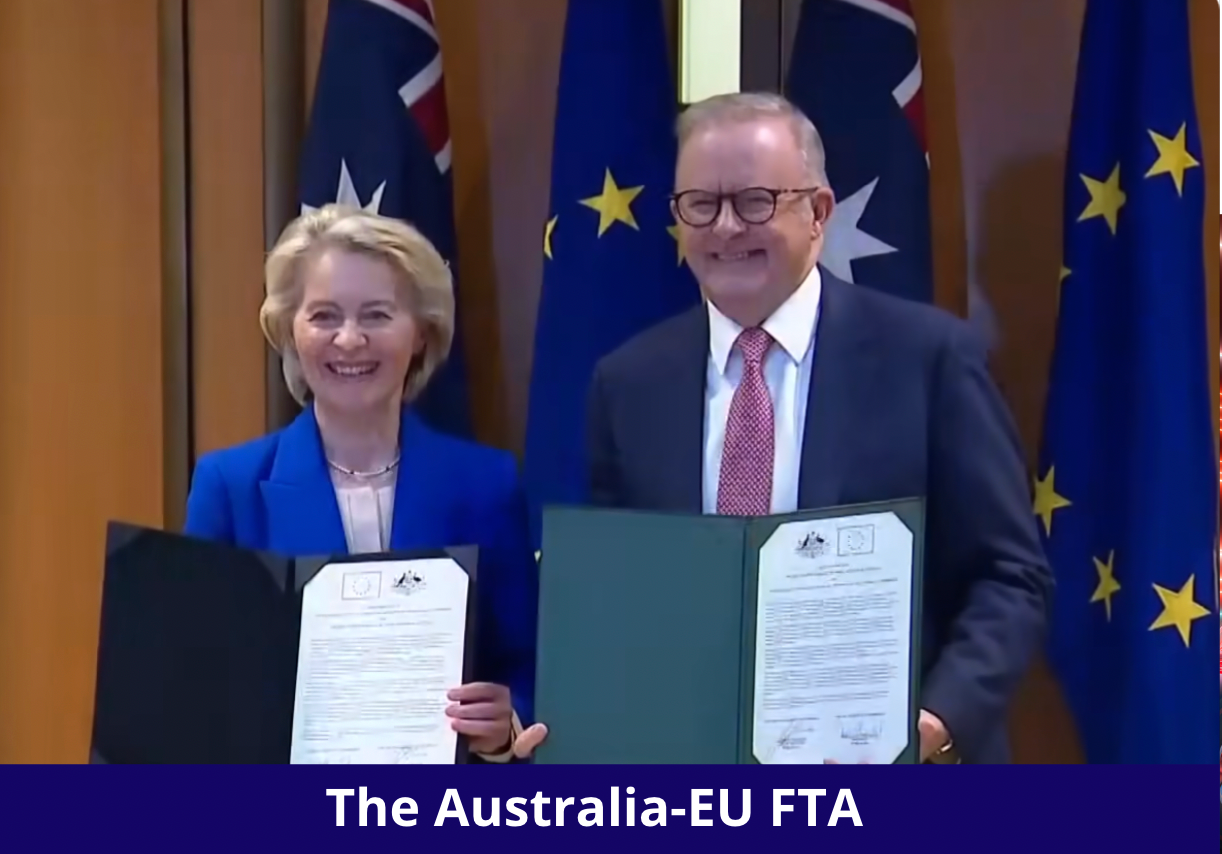
Signal 4: The Australia-EU FTA creates a cleaner trade lane for critical minerals
a) What happened
Australia and the European Union concluded a free trade agreement in March 2026. Prime Minister Albanese said almost all Australian exports of manufactured goods and mineral resources will face zero import tariffs into the EU, including Australian critical minerals and hydrogen. The European Commission says the agreement improves access to critical raw materials and strengthens strategic ties with the Indo-Pacific. Its critical raw materials factsheet adds that the FTA is meant to secure and diversify EU supply, and includes no export restrictions, no export monopolies, no export taxes, no local transformation requirements, and enhanced cooperation on future joint projects.
b) Why it matters
This is not just another trade deal. It is a supply chain architecture signal. The agreement is designed to make Australian critical minerals easier for Europe to access, while also making the trade lane more predictable and less vulnerable to policy frictions. One notable point is that it explicitly rejects local transformation requirements in this corridor, which contrasts with the stronger value add demands seen in some producer country strategies elsewhere.
c) Implications for capital and strategy
For investors and boards, this implies that Australian upstream and downstream assets may become more attractive to EU linked capital and offtake structures, not only because of geology but because trade architecture is being designed to reduce friction and increase policy certainty.
Signal 5: Codelco shows how war pressure is entering the copper cost curve
a) What happened
Bloomberg, as summarized by Mining.com, reported on March 27 that Codelco expects disruptions from the Middle East war to lift its copper production costs by about 5%. Mining.com’s summary said higher diesel prices, more expensive supplies, and the Chilean government’s proposed suspension of a fuel tax credit would together add roughly 10 cents per pound to current cash costs of about US$2 per pound. Reuters separately reported that Codelco presented its 2025 results and 2026 production target at a March 27 press conference. This should be read as a company estimate reported in the press rather than as a formal revised cost guidance release.
b) Why it matters
This is an important market signal because it shows geopolitical disruption reaching directly into the economics of copper production. That matters beyond Codelco. Copper supply security is often discussed through new projects, permitting, and grade decline. But this week’s signal is different: it suggests that war related disruptions can also erode competitiveness and raise costs in existing tier one supply, even before a physical supply shock fully materializes.
c) Implications for capital and strategy
For investors and boards, this implies that copper exposure should be stress tested not only for permitting and capex risk, but also for energy, freight, and geopolitical cost inflation. In a metal as systemically important as copper, margin pressure can become a strategic variable in its own right.
Signals to watch
- Whether EnergyX can move quickly from demonstration scale validation to a credible Phase 1 pathway in Smackover, and whether its domestic refining narrative attracts stronger industrial partners or offtake interest.
- Whether DFC’s pathway to equity in Syrah becomes binding and materially accelerates Balama ramp up and Vidalia commercial sales, making graphite one of the clearest mine to anode U.S. linked chains outside China.
- Whether OFAC’s new licenses around Venezuelan minerals remain narrow legal corridors or become the basis for a broader mineral access strategy in a sanctioned jurisdiction.
- Whether the Australia-EU FTA begins to shape concrete critical minerals projects, offtake structures, or EU investment into Australian value chains under the new lower friction trade framework.
- Whether Codelco’s 5% war related cost estimate proves temporary or becomes an early sign that geopolitical inflation is starting to alter the economics of large scale copper supply more broadly.
Three strategic questions for this week
- As critical mineral security moves into plants, equity, licenses, and trade agreements, are we still analyzing value mainly through deposits, or through the full architecture that determines whether material can actually be processed and sold?
- When governments intervene more directly — through equity, sanctions flexibility, or tariff elimination — are we mapping which assets are being pulled inside strategic lanes and which remain commercially exposed outside them?
- In copper and other large industrial metals, are we paying enough attention to how war and logistics shocks can alter costs and timing, even when the physical supply base itself remains in place?
For the full Geopolitical Mining framework behind this article, see our book Mining Is Dead. Long Live Geopolitical Mining.
Sources for this week’s note
-
EnergyX, American Made Lithium: EnergyX Commissions Project Lonestar™ 250-ton DLE Lithium Production Plant on U.S. Soil, March 25, 2026.
https://energyx.com/app/uploads/2026/03/FINAL-Q1-2026-EnergyX-Lonestar-Demo-Plant-3.25.2026.pdf -
EnergyX, Project Lonestar™ Lithium.
https://energyx.com/lonestar/ -
U.S. International Development Finance Corporation, DFC Opens Pathway to Secure Strategic Equity Interest in Syrah, Owner of the Balama Graphite Mine and Vidalia Anode Plant, to Advance U.S. Critical Mineral Priorities, March 25, 2026.
https://www.dfc.gov/media/press-releases/dfc-opens-pathway-secure-strategic-equity-interest-syrah-owner-balama-graphite -
Syrah Resources, Equity Raising and US Government Strategic Funding Proposals, March 26, 2026.
https://company-announcements.afr.com/asx/syr/a8c5cda2-28b2-11f1-aa36-12f625378ebb.pdf -
U.S. Treasury / OFAC, Issuance of New and Amended Venezuela related General Licenses, March 27, 2026.
https://ofac.treasury.gov/recent-actions/20260327_33 -
Prime Minister of Australia, Australia-European Union Free Trade Agreement, March 24, 2026.
https://www.pm.gov.au/media/australia-european-union-free-trade-agreement -
European Commission, The EU-Australia trade agreement, March 2026.
https://commission.europa.eu/topics/trade/eu-australia-trade-agreement_en -
European Commission, Factsheet – EU-Australia Free Trade Agreement: Enhancing trade and investment in critical raw materials, March 2026.
https://policy.trade.ec.europa.eu/eu-trade-relationships-country-and-region/countries-and-regions/australia/eu-australia-agreement/factsheet-eu-australia-free-trade-agreement-enhancing-trade-and-investment-critical-raw-materials_en -
Bloomberg / Mining.com, Codelco sees war disruptions adding 5% to cost of making copper, March 27, 2026.
https://www.mining.com/web/codelco-sees-war-disruptions-adding-5-to-cost-of-making-copper/ -
Reuters, Chile’s Codelco logs $4.85 billion pre-tax profit in ‘very difficult’ 2025, March 27, 2026.
https://www.reuters.com/world/americas/chiles-codelco-reports-485-billion-pre-tax-profit-2025-2026-03-27/