
Geopolitical Mining Weekly
Week of 15–21 December 2025
Independent weekly note for investors and strategic decision makers in critical minerals and mining.
What this week really tells us
This week, four moves stood out in the critical minerals and metals space:
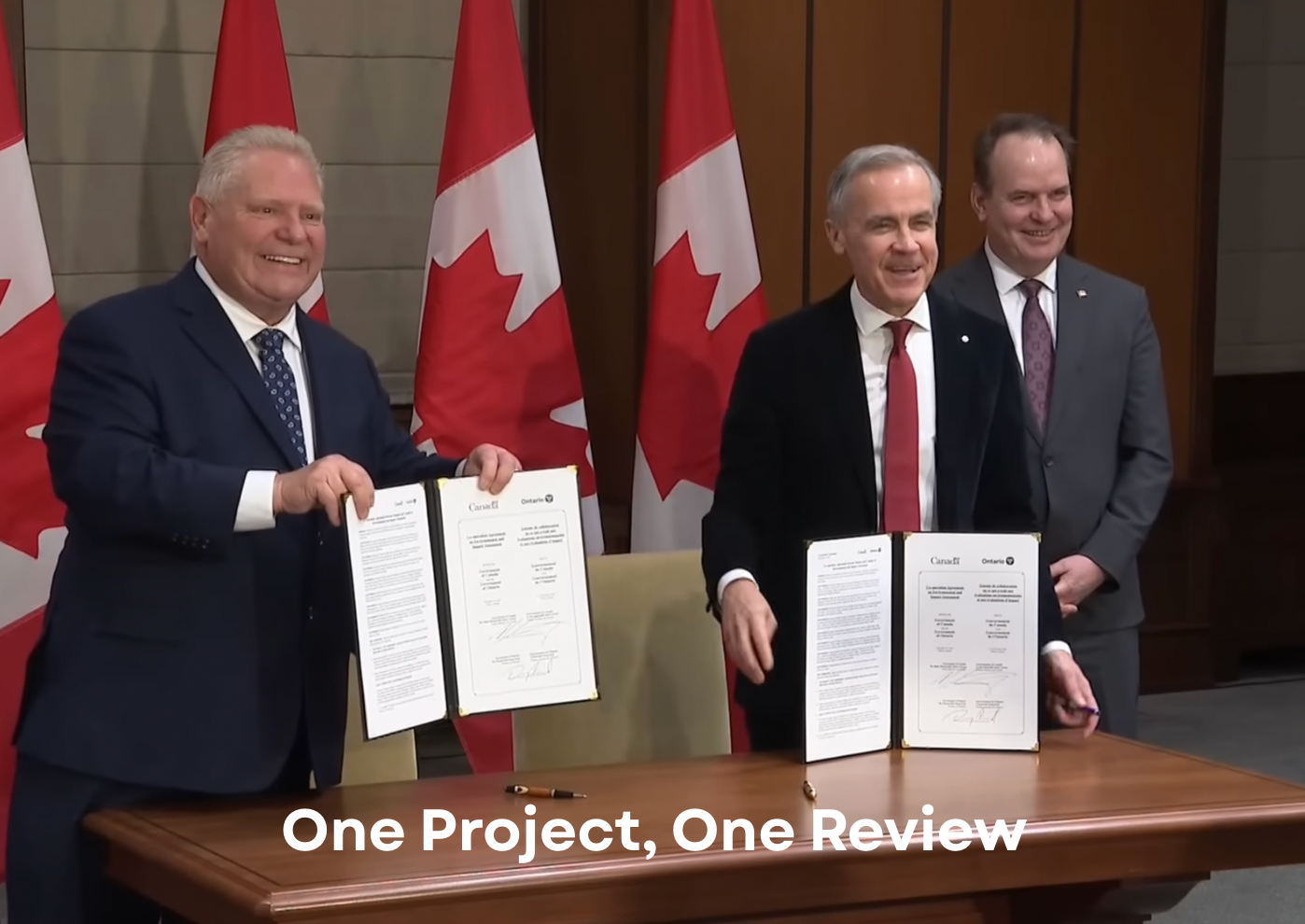
- Ontario and Ottawa signed a “one project, one review” co-operation agreement to streamline impact assessments and speed up major infrastructure and mining approvals, including in the Ring of Fire.
- China’s rare earth magnet exports to the US fell 11% in November, reinforcing how strategic components, not just ores, are becoming pressure points in the US–China relationship.
- A proxy fight in Korea Zinc now threatens a US$7.4 billion zinc and critical-minerals smelter project in Tennessee, backed as a flagship of the US domestic critical-minerals push.
- Copper prices rallied to nearly US$12,000/t, with tin and nickel also surging on tight supply, AI-linked demand and signals of future output cuts from Indonesia.
Taken together, these signals point to the same underlying pattern:
Governments are trying to accelerate approvals, secure midstream capacity and reduce exposure to strategic choke points just as markets start to price in structural tightness across multiple metals. The path from ambition to real supply is being shaped less by geology than by permits, governance and trade policy.
For investors and boards, the core tension is this: The world is waking up to structural shortages and AI-driven demand, but the tools used to close the gap—fast-track permitting, state-backed smelter deals and export controls—introduce new layers of political, legal and governance risk.
Signals of the week
Signal 1 – Canada: Ontario–Ottawa “one project, one review” deal to accelerate major projects
What happened (facts)
On December 18, the federal government and the Province of Ontario signed a Co-operation Agreement on Environmental and Impact Assessment, committing both sides to implement “One Project, One Review, and One Decision” where projects fall under both jurisdictions. The agreement allows the federal impact assessment process to rely, in many cases, on Ontario’s assessment and regulatory processes (and vice versa), with commitments on information-sharing, aligned timelines and co-ordinated conditions.
In parallel, Ontario framed the agreement as a milestone to eliminate federal duplication and “unlock” the potential of the Ring of Fire region, explicitly linking the framework to northern infrastructure and critical minerals.
Why it matters (analysis)
This is a practical test of what “faster permitting” can look like in a rule-of-law jurisdiction:
- Core environmental law is not being rewritten; instead, the process architecture is being reorganised to avoid doing the same work twice.
- Both Canada and Ontario are explicitly acknowledging that regulatory efficiency is part of the investment climate and economic resilience, not just a technical matter.
- The agreement reaffirms the duty to consult Indigenous Peoples and, where necessary, to adjust project design and conditions to respect their rights, and makes clear that acceleration does not mean lowering that standard.
For critical-minerals projects, the message is clear: there is political will for good projects to reach decisions faster, provided they meet environmental and Indigenous-rights expectations.
Implications for capital and strategy
- For projects in Ontario that already take ESG and Indigenous inclusion seriously, this agreement improves timeline risk: there is now a formal architecture backing a single, coherent process instead of two parallel ones.
- Approval models for Canada should start to distinguish between provinces that have functional co-operation agreements and those where a “two-window” logic still dominates.
- The critical test will be execution in complex cases: the Ring of Fire, major transmission corridors, new processing plants. That is where we will see whether “one project, one review” is a slogan or a practice.
Signal 2 – China’s rare earth magnet exports to the US decline: pressure on the real choke point
What happened (facts)
In November, China’s exports of rare earth magnets to the United States fell by roughly 11%, from around 656 tonnes in October to about 582 tonnes in November, according to Chinese customs data. This comes after a year marked by new export-control rules on rare earths and several episodes of sharp, temporary drops in shipments. This monthly drop is part of a broader pattern in which Beijing treats minerals and components as strategic leverage, a logic we explore in more detail in our article
For China, Minerals Were, Are and Will Always Be Strategic
.
Magnets are the most strategic form of rare earth trade: they concentrate neodymium, praseodymium and other elements into a high-value component used in EV motors, wind turbines, high-efficiency industrial systems and defence equipment.
Why it matters (analysis)
The key point is not the exact monthly figure but where the real bottleneck sits:
- Even if mining and oxide separation diversify over time, magnet manufacturing capacity remains highly concentrated and much harder to replicate.
- The combination of tighter export rules, enhanced scrutiny and broader trade tension means that even “calm” periods can mask structural fragility in component flows.
- For the US and its allies, the lesson is that it is not enough to finance mines; building trusted magnet capacity is now a strategic requirement.
In geopolitical-mining terms, the centre of gravity shifts from “where the ore is” to where the critical component is made—where technology, margin and dependency are concentrated.
Implications for capital and strategy
- Producers of rare earth magnets in trusted jurisdictions should be treated as strategic infrastructure, not niche specialty players.
- Projects that combine extraction, processing and magnet manufacturing within aligned supply chains are likely to move up the queue for public support, blended finance and long-term offtake.
- OEMs in automotive, wind, defence and electronics need to assume that volatility in Chinese magnet exports is structural and design accordingly: diversified sourcing, inventory buffers and, where engineering allows, drivetrain architectures less dependent on rare earth magnets.
Signal 3 – U.S. zinc and critical-minerals smelter faces Korean proxy-fight risk
What happened (facts)
A project to build a zinc and critical-minerals smelter valued at around US$7.4 billion in Tennessee, promoted as a flagship asset to strengthen US capacity in strategic metals, has become entangled in a corporate control dispute in South Korea. A group of activist shareholders is seeking to block a share issuance that forms part of the parent company’s financing plan for the project, arguing that the transaction would shift the balance of power in the ongoing proxy battle. This kind of tension between industrial strategy and corporate governance is part of a broader shift we explore in our article
For the U.S., Minerals Are Now Geopolitics
.
As a result, the financial viability of the smelter is now contingent on the outcome of a boardroom and court fight unfolding thousands of kilometres away from the strategic asset itself.
Why it matters (analysis)
This case exposes a rarely discussed vulnerability in the “historic deal” model between governments and large companies:
- States can bring capital, guarantees and political backing, but the governance of the corporate partner remains governed by corporate law and the share register in the home country.
- In practice, one country’s industrial policy is partly exposed to the activism, succession dynamics and control struggles of another.
- In a world where many governments are pursuing “friend-shoring” of smelting and refining, this tension between strategic objectives and corporate governance will keep surfacing.
It is a reminder that a project can be “strategic” in Washington and still fail for purely corporate reasons in Seoul.
Implications for capital and strategy
- For investors and boards, JVs and large state-aligned smelter projects should be evaluated not just on project economics and country risk, but on the map of corporate control: who can block capital increases, refinancings or structural changes.
- Governments using this model will need stronger protections in their agreements: contingent funding structures, partner-replacement mechanisms or more robust capital frameworks.
- For private capital, these situations can create entry points or restructuring opportunities—but only if cross-border governance risk is properly understood and reflected in terms.
Signal 4 – Copper nears US$12,000/t as base metals rally on AI and supply tightness
What happened (facts)
Copper prices approached US$12,000 per tonne, coming within a few dollars of their all-time high, as base metals staged a broad rally. Key drivers include:
- Mine disruptions and production adjustments that have tightened available supply.
- A strong increase in US imports.
- Growing expectations of demand linked to electrification and, increasingly, to AI infrastructure (data centres, networks, high-density power hardware).
Tin, another critical metal for electronics and solder, has risen about 50% this year and reached a three-year high. Nickel has recovered following signals from Indonesia that it may cut nickel ore output in 2026, and aluminium has also strengthened amid smelter-closure risks and production limits. Taken together, these moves underline that copper and related base metals are increasingly behaving less like generic commodities and more like strategic inputs with differentiated premia – a pattern we analyse in more detail en nuestros artículos “Copper premiums and geopolitical mining”
Copper Premiums and Geopolitical Mining
y “Codelco’s record premiums: when copper stops behaving like a commodity”
Codelco’s Record Premiums: When Copper Stops Behaving Like a Commodity
at Geopolitical Mining.
Why it matters (analysis)
This dynamic reinforces several points:
- Copper remains the thermometer of the industrial metals complex.
- AI is now a physical demand driver: more data centres, more installed power, more infrastructure—translating into higher demand for copper, tin, aluminium and, in some use-cases, nickel.
- A small number of jurisdictions control key supply-side decisions (Indonesia in nickel, major Andean producers in copper, China in smelting), which amplifies the impact of policy and regulatory shifts.
From a critical-minerals perspective, it underlines that the energy transition and the AI wave are not two separate stories, but a combined multi-metal demand shock hitting an investment and permitting system that is still slow, risk-averse and fragmented.
Implications for capital and strategy
For investors and boards, the central risk is no longer just price volatility, but policy volatility in producer countries that control a disproportionate share of ore and processing capacity.
- Positions in copper, tin and nickel should be mapped not only by volume but by jurisdictional concentration and regulatory risk, especially where a single decision (on exports, royalties or environmental rules) can alter market balance.
- Capital-allocation decisions will need to answer whether this is the moment to:
- Accelerate expansions and capacity upgrades in relatively stable jurisdictions, or
- Treat current prices as a stress-test scenario for cost curves, balance sheets and the resilience of long-term offtake structures.
Signals to watch
- How “one project, one review” in Ontario is implemented in practice: which projects are prioritised, what timelines are achieved, and whether significant legal or political challenges emerge.
- Whether Chinese rare earth magnet exports to the US stabilise, continue to decline or experience new episodes of disruption as trade and tech tensions evolve.
- The outcome of the corporate dispute in Korea tied to the Tennessee smelter, and any redesign of the financing vehicle or JV structure that follows.
- How copper, tin and nickel prices behave in early 2026 if Indonesia confirms nickel production cuts and tech-sector capex remains strong.
Three strategic questions for this week
Permitting vs. risk narrative
- Are we updating our Canada risk and timeline models to reflect co-operation frameworks like Ontario’s, or are we still using generic assumptions that do not distinguish between provinces and permitting regimes?
AI and magnets as a strategic basket
- Are we treating copper, tin, nickel and rare earth magnets as a coherent strategic basket linked to AI and electrification, or still evaluating each commodity in isolation?
Governance in strategic JVs
- In projects where the state is a shareholder or anchor offtaker, have we really mapped who can block key decisions in other jurisdictions—and built that into our risk analysis and deal structures?
Sources for this week’s note
- Government of Canada, “Co-operation Agreement between Ontario and Canada on Environmental and Impact Assessment,” 18 December 2025.
- Government of Ontario, “Ontario and Canada sign historic co-operation agreement to eliminate federal duplication and unlock the Ring of Fire,” 18 December 2025.
- Bloomberg, “China’s Rare-Earth Magnet Exports to US Decline in November,” 20 December 2025 (also reported via MINING.COM).
- Bloomberg, “Korean Proxy Fight Threatens to Derail Trump’s Big Zinc Bet,” 19 December 2025 (also reported via MINING.COM).
- Bloomberg, “Copper Price Nears $12,000 as Base Metals Stage Broad Rally,” 19 December 2025 (also reported via MINING.COM).