Geopolitical Mining · Country & Region Analysis ·
Indonesia: A Country to Watch in Geopolitical Mining
Authors: Marta Rivera | Eduardo Zamanillo
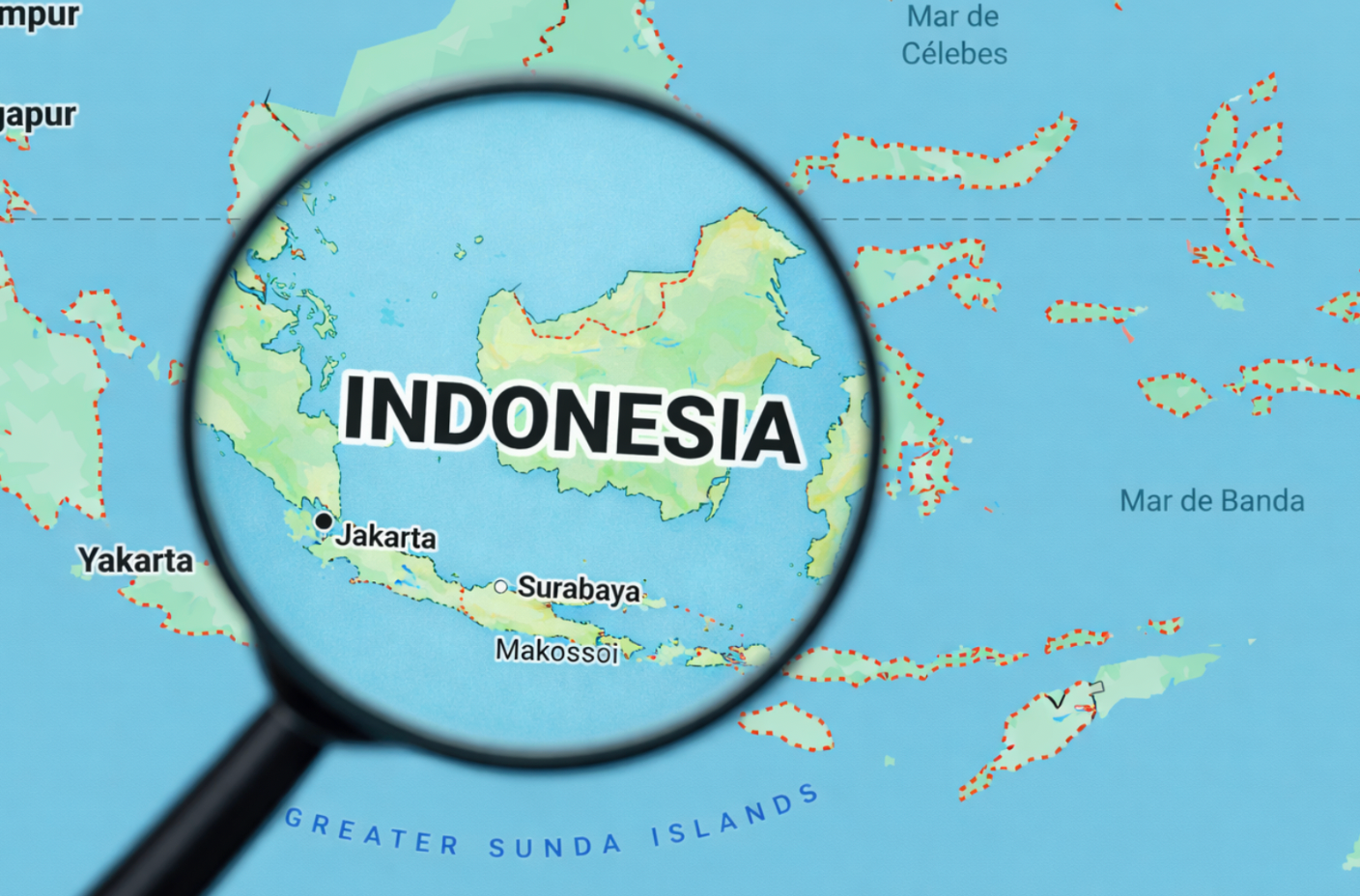
Indonesia matters not only because of the scale of its nickel endowment, but because it chose to use that endowment to force industrialization, attract foreign capital, and build a more strategic position in the value chain. That choice is now reshaping its relations with China, the United States, and the State itself.
1. Why Indonesia Is Becoming a Country to Watch
Indonesia is becoming a particularly relevant country to watch in geopolitical mining. Its significance does not begin with a trade agreement or a diplomatic summit. It begins with a strategic shift: rather than remain primarily a supplier of raw materials, Indonesia has increasingly used its mineral base to encourage domestic processing, attract industrial investment, and expand its role in the metals and battery economy.
The material basis for that shift is substantial. Indonesia sits at the center of the global nickel story, and Jakarta has treated that endowment not simply as an export advantage, but as the basis for a broader industrial agenda. The government’s own language increasingly reflects that approach: nickel is no longer framed only as a mining commodity, but as part of a wider question of energy resilience, industrial capability, and national positioning.
2. The Strategic Turn: From Raw Exporter to Industrial Ambition
Indonesia’s move toward downstreaming did not begin with a single administration or a single regulatory moment. It developed over time, across several governments, around a consistent idea: a country with large mineral resources could capture more value if a greater share of processing took place domestically rather than abroad. The legal basis for that shift was set out in the 2009 mining law, while implementation became more visible from January 2014, when export restrictions on raw ores began to redirect attention toward domestic processing and refining.
The early phase was not perfectly linear. Indonesia adjusted implementation over time, including transition periods and limited relaxations for certain mineral concentrates while processing capacity was being developed. That is part of what makes the case analytically useful. Downstreaming in Indonesia did not emerge as a single abrupt break, but as a policy line that was tested, adjusted, and gradually reinforced as industrial capacity expanded.
The nickel ore export ban that took effect on January 1, 2020 marked a more forceful phase in that broader direction. By then, the policy was increasingly presented not simply as a mining measure, but as part of a wider effort to strengthen domestic industry, raise value added, and reduce reliance on exporting raw materials. During the Jokowi administration, official statements linked downstreaming to industrial development, trade performance, and current account resilience. Under President Prabowo, that direction has been maintained and folded more explicitly into a broader agenda of industrialization and strategic investment.
What stands out, then, is not only the scale of the policy shift, but its continuity. Indonesia did not leave the development of the midstream entirely to market timing. Over time, it used export restrictions and regulatory sequencing to encourage processing capacity to move onshore. This did not resolve every tension in the model, but it did begin to reposition Indonesia within the value chain. That is one reason the case is worth close observation.
3. China and the Industrial Build Out Inside Indonesia
China became an important part of Indonesia’s nickel story through the evolution of the value chain itself. In the earlier phase, the relationship was centered on trade. As Indonesian nickel ore production expanded between 2009 and 2013, significant volumes of ore were exported to China, where processing capacity was already established and industrial demand was strong. An analysis published in the Indonesian Mining Journal describes this phase as one in which Indonesia supplied ore while the more advanced stages of processing were carried out abroad.
This helps explain the context in which Indonesia’s policy direction took shape. The issue was framed in terms of industrialization and domestic value added. The objective was to bring a larger share of processing activity into Indonesian territory and to connect mineral production more directly with domestic industrial development. President Jokowi expressed that logic clearly, linking industrialization with higher domestic value creation and with a stronger external economic position. In that context, downstreaming was presented as an industrial and economic strategy.
As Indonesia introduced export restrictions on raw ore, the relationship with China evolved as well. China became part of the industrial build out that followed inside Indonesia. The same Indonesian Mining Journal analysis notes that after the export restrictions took effect, nickel ore was redirected toward domestic processing and refining. In January 2015, the NPI smelter of PT Sulawesi Mining Investment in Morowali was already operating with a capacity of 300,000 tons per year, supported by dedicated power infrastructure. In 2016, PT Indonesia Guang Ching Nickel and Stainless Steel Industry established another NPI smelter with a capacity of 600,000 tons per year, also supported by its own power plant. By that stage, processing capacity was increasingly taking shape inside Indonesia.
This is where the Indonesian case becomes especially interesting. Regulation redirected the chain inward, and Chinese linked capital and industrial participation became part of the expansion that followed. Processing facilities, power infrastructure, and later additional industrial stages began to develop inside Indonesian territory. The relationship therefore evolved from ore trade into a broader pattern of industrial cooperation connected to Indonesia’s downstreaming agenda.
From today’s perspective, this sequence gives the case broader significance. The policy itself was articulated in the language of industrialization, domestic value added, and economic upgrading. Over time, that same sequence has also come to matter in a wider strategic environment shaped by batteries, processing capacity, and supply chain positioning. That is one reason Indonesia has become such an important case to follow.
The more recent phase of the relationship reflects that same continuity. During President Prabowo’s November 2024 visit to Beijing, Chinese official reporting described the bilateral relationship through industrial chain cooperation, infrastructure, energy minerals, and strategic coordination. In May 2025, Indonesia’s Cabinet Secretariat described the continuation of the EV battery downstream project through the Huayou consortium and a parallel CATL linked project, presenting both as part of an ecosystem that runs from mining to battery production inside Indonesia. In that sense, the relationship with China now sits within a broader Indonesian effort to deepen industrial activity at home and to expand the domestic base of processing and manufacturing.
What makes this relationship worth following closely is the sequence it reveals. Indonesia began from a position of export dependence in raw ore, redirected the chain inward through policy, and then incorporated external industrial participation into the domestic build out of processing capacity. That trajectory gives the case its analytical value. It shows how a producer state can use industrial policy and international partnerships to bring more of the value chain into its own territory.
4. Midstream Works Through Feedstock, Scale, and Market Continuity
One of the most instructive aspects of the Indonesian case is the way it has approached refining and processing as an industrial system. Once a country decides to move more of the value chain onshore, it enters a different kind of equation. Refining requires steady mineral supply, operational scale, and a commercial structure capable of absorbing what the system produces. In that setting, continuity becomes central. The processing base needs enough material to keep operating, and it needs enough market demand to place processed output in a viable way.
This helps clarify why Indonesia’s downstreaming strategy has increasingly taken the form of industrial coordination. In January 2026, Ditjen Minerba stated that the nickel smelter industry required an estimated 250 to 290 million tons of raw material. That figure is useful because it places attention on the scale of feedstock needed to sustain refining activity over time. Once processing capacity is installed, mineral reserves alone are no longer the key metric. What matters is the regular flow of ore into the system and the ability to match that flow with the requirements of industrial operations.
The same logic extends to planning. In October 2025, ESDM said that RKAB planning would shift from three year cycles to annual cycles beginning in 2026, with the stated aim of improving planning accuracy and responsiveness to domestic industrial needs. This suggests that Indonesia is increasingly treating mining output and refining capacity as parts of a connected industrial structure. Production timing, quota management, and processing needs are being brought into closer alignment.
The commercial side is just as important. A refining system gains weight when it can consistently place processed output into the market. In that respect, Indonesia’s own official figures point to a substantial expansion in marketable nickel products. ESDM reported in 2025 that exports of Indonesian nickel products rose from about US$3.3 billion in 2017 to US$33.9 billion in 2024. That change indicates that the growth of processing capacity has been accompanied by a much larger commercial outlet for what Indonesia is producing.
This is what gives the Indonesian case its analytical value. The country has increasingly treated the midstream as a question of industrial continuity. Feedstock continuity, processing scale, and market continuity all need to move together. From that perspective, Indonesia offers a useful case of how a producer state can connect mineral endowment, industrial organization, and commercial expansion inside its own territory.
5. The State as Industrial Coordinator
As more of the value chain moved into Indonesian territory, the role of the state also became more visible. Once downstreaming began to produce a larger processing base, the challenge was no longer only how to attract investment or build facilities. It also became a question of coordination: how to connect upstream extraction, industrial processing, capital allocation, and longer term national objectives within a more coherent framework.
This is where Indonesia’s institutional architecture becomes relevant. MIND ID presents itself as Indonesia’s mining holding company and describes its role as integrating major assets into a unified national strategic ecosystem. In its own language, the company is tasked with managing and developing Indonesia’s mineral resources in an integrated, value added, and sustainable manner, while driving the transformation of the mining industry from upstream to downstream through innovation, downstream development, and strong governance. That description is useful because it shows the state seeking more than regulatory oversight. It shows an effort to organize the chain more deliberately across multiple commodities and industrial stages.
The same logic appears in Danantara, although from a different angle. At its launch in February 2025, President Prabowo described Danantara not as a mere investment management board, but as a national development instrument meant to optimize the management of Indonesia’s wealth. He also said the fund would be invested in national industrialization and downstreaming projects expected to create added value, jobs, and long term prosperity. In that framing, Danantara appears as a tool for directing capital toward the next phase of industrial build out.
That role became even clearer in Prabowo’s Davos 2026 address. There, he linked peace, stability, capital allocation, and Danantara in a single argument, describing the fund as a vehicle through which Indonesia could finance and co-finance the industries of the future. He also presented it as part of a broader effort to improve governance, rationalize state owned enterprises, and strengthen Indonesia’s position as a co-investment partner. This matters because it suggests that the state’s role is being framed not only in terms of ownership, but also in terms of direction, coordination, and capital deployment.
This broader coordinating role extends beyond nickel. MIND ID’s SGAR project in Mempawah, which the company presents as evidence of its bauxite aluminium downstreaming strategy, shows the same logic in another commodity chain. The project links bauxite ore in West Kalimantan to alumina refining and then onward to aluminium production in Kuala Tanjung. MIND ID describes this as an integrated ecosystem from upstream bauxite ore to downstream aluminium industrialization, with 1 million tons of alumina output per year supported by 3.3 million tons of bauxite raw material. In this sense, the objective is not only to process more material, but to connect more stages of industrial activity inside the country.
The same broader coordinating logic is also visible in cobalt. As Indonesia expanded its HPAL based nickel processing chain, it also created the conditions for a rapid rise in cobalt output, since cobalt is recovered alongside nickel from laterite ores and then folded into the same battery materials pathway. Indonesia’s Ministry of Industry places HPAL derived MHP, nickel sulfate, and cobalt sulfate within a single EV industrial roadmap, which suggests that cobalt is being developed not as a separate mining story, but as part of a more integrated industrial strategy. The scale of that shift is striking. According to USGS data, Indonesia’s mined cobalt production rose from 2,100 metric tons in 2021 to 44,000 metric tons in 2025, making it the world’s second largest cobalt producer. In that sense, cobalt reinforces the same pattern seen in bauxite: the state is not only encouraging more extraction, but helping connect mineral resources, processing technology, industrial policy, and downstream manufacturing within a more coherent national structure.
Seen in that sequence, the Indonesian state does not appear primarily as a distant regulator, nor simply as a direct operator of every asset. It appears more as an industrial coordinator: a state that is building instruments to connect mineral resources, processing capacity, capital, and strategic priorities within a more integrated national structure. Once the chain begins to move onshore, the question is no longer only who owns the mines or who builds the plants. It is also who organizes the system that links them.
6. Making the Chain Governable
As more of the value chain has moved into Indonesian territory, governance has also become a more visible part of the industrial strategy. Once processing capacity expands, the question is no longer only how to build plants or attract investment. It also becomes a question of how to monitor flows, connect permits with production, and align industrial activity with fiscal and regulatory oversight.
This is where Indonesia’s governance architecture becomes especially relevant. In July 2024, the government formally expanded SIMBARA to nickel and tin, presenting it as an integrated platform connecting licensing, sales plans, verification, exports, port clearance, PNBP, and export proceeds. In the 2024 Ditjen Minerba performance report, SIMBARA is described as a tool to improve transparency, efficiency, and compliance across the mining value chain. The same report states that only registered companies with approved RKAB can generate billing and obtain an NTPN, and notes that minerba PNBP reached IDR 172.96 trillion in 2023.
What makes this significant is not only the existence of a digital platform, but the role it plays within a larger industrial structure. As more mining and processing activity takes place inside the country, the chain itself becomes more complex and more economically significant. In that context, systems such as SIMBARA help connect production, verification, fiscal flows, and export procedures within a single administrative framework.
This gives the Indonesian case an additional layer of interest. The country is not only expanding processing capacity. It is also building the tools to make that expansion more legible, more traceable, and more closely connected to state oversight. In practical terms, that means the industrial build-out is increasingly accompanied by a governance build-out.
Downstreaming brought more of the chain onshore. Industrial expansion increased the need for coordination. And that coordination, in turn, created demand for systems that could make the chain more visible and more governable over time. This is one of the reasons Indonesia is such a useful case to observe: it shows how industrial policy and governance architecture can begin to develop together.
7. Indonesia Between China and the United States
By this stage in the story, Indonesia is no longer engaging the outside world from the position it occupied when it mainly exported raw ore. It already has a deeper processing base at home, a more developed industrial relationship with China, and a stronger domestic framework for coordinating and governing the chain. That changes the meaning of its external partnerships. The question is no longer only how Indonesia industrializes, but how it uses that industrial base to position itself among larger powers.
This is what makes the United States relevant at this stage. China had already become deeply connected to the build out of processing capacity inside Indonesia. The United States enters later, and through a different channel: critical minerals, supply chain resilience, market access, and economic security. By the time Washington becomes more visible in the story, Indonesia is already operating from a different base. More of the refining system is inside the country, and that appears to give Jakarta greater room to engage both China and the United States from a position less defined by raw material dependence alone. This last point is an inference from the sequence described in the previous sections and from the structure of the U.S.–Indonesia agreement.
That timing becomes easier to understand when read alongside the broader Davos context. In January 2026, President Trump presented a vision centered on American prosperity, domestic production, and a stronger economic base, while President Prabowo in Davos linked peace, stability, governance, capital allocation, and industrialization as the foundations of Indonesia’s future growth. The language was not identical, but both leaders were speaking more openly in terms of productive capacity, industrial foundations, and the real economy.
This was one of the conclusions we drew in our Davos analysis, particularly in “Davos 2026 First Axis of Analysis. United States and China: Middle Class, Domestic Demand and the Industrial Turn” and “Davos 2026 Second Axis of Analysis. Indonesia and Egypt: Stability, Growth and the Social Contract in the Global South”: despite their different political languages, both pointed toward a stronger emphasis on the real economy, productive capacity, and industrial development.
This is the context in which the U.S.–Indonesia Agreement on Reciprocal Trade should be read. The White House presented the February 2026 deal as a package under which Indonesia would remove tariff barriers on more than 99% of U.S. exports, address non-tariff barriers, and deepen cooperation on supply chains, export controls, investment security, and industrial commodities including critical minerals. The same announcement referred to roughly US$33 billion in commercial deals tied to sectors such as energy, aerospace, and agriculture.
The agreement itself gives that opening a more specific industrial form. Under Article 6.1, Indonesia agrees to allow and facilitate U.S. investment in critical minerals and related infrastructure, cooperate on secure critical mineral supply including rare earths, and work with U.S. companies across mining, refining, processing, transport, and downstream production. The same section also includes a governance clause under which Indonesia is to restrict excess production at foreign owned processing facilities so that output conforms to Indonesian mining quotas, and ensure that foreign owned industrial parks and processing facilities are subject to the same tax, environmental, labor, quota, and legal requirements as other entities.
What makes this stage especially interesting is that the agreement does not arrive at the beginning of Indonesia’s industrial story. It arrives after Indonesia has already built part of its refining base at home and after China has already played a major role in that industrial build out. That sequence appears to give Indonesia more flexibility than it had in the earlier ore export phase. It is now engaging the United States at a moment when Washington is treating critical minerals as part of national economic security, while Indonesia itself has more domestic processing capacity and therefore more room to work across both relationships. That does not remove the tensions of balancing both. It is precisely what makes the case worth watching.
8. Indonesia’s Next Challenges
If Indonesia’s trajectory has become more visible and more strategic over time, the next phase is also likely to be more demanding than the first. Building the industrial base was one challenge. Sustaining it, governing it, and turning it into long term strategic advantage is another.
The first challenge lies in preserving room for manoeuvre while working with both China and the United States. China has already been deeply connected to the industrial build out inside Indonesia, while the United States is entering through critical minerals, market access, supply chain resilience, and economic security. That creates opportunity, but it also raises a more difficult strategic question: how can Indonesia deepen both relationships without allowing either one to narrow its own national direction? In that sense, the challenge is not simply diplomatic balance. It is maintaining industrial autonomy while engaging with two larger powers that arrive with different priorities and different forms of leverage.
A second challenge lies in sustaining the refining system itself. As the article has shown, once more of the chain moves onshore, continuity becomes essential. The midstream requires feedstock, scale, planning discipline, and a commercial outlet able to absorb growing volumes of processed output. Indonesia has already made significant progress on this front, but that progress raises the bar for what comes next. The question is no longer only whether processing capacity can be built. It is whether that capacity can be supplied, synchronized, and expanded over time without creating new bottlenecks in ore availability, logistics, or market absorption.
A third challenge concerns the depth of domestic capability. Indonesia has succeeded in bringing more industrial activity into its own territory. The next test is how much of that activity becomes more deeply rooted in Indonesian capacity itself: in domestic suppliers, technical knowledge, industrial services, financing instruments, and long term local participation across the chain. This is where the case becomes especially important to observe. Hosting processing is already significant. Turning that installed base into deeper national capability is a more demanding step.
A fourth challenge lies in governance and legitimacy. As industrial systems become larger and more economically central, they also become more exposed to questions of coordination, compliance, environmental performance, and public legitimacy. Indonesia has already moved to make the chain more governable through annual planning, stronger oversight, and platforms such as SIMBARA. But the broader challenge remains: whether governance, value addition, and public legitimacy can keep pace with the scale and speed of industrial expansion. That will matter not only domestically, but also externally, as partners increasingly tie critical minerals to standards, traceability, and economic security.
This is why the Indonesian case remains so important to watch. Its first phase showed that a producer state can move aggressively to bring more of the chain onshore. The next phase will show whether that industrial strategy can be sustained, deepened, and balanced across multiple external relationships without losing coherence at home.
9. Indonesia and the New Logic of Geopolitical Mining
Indonesia is worth watching not only because of the scale of its nickel endowment, but because it offers one of the clearest cases of a country moving from resource management toward something closer to geopolitical mining. Over time, Indonesia has treated minerals not simply as export commodities, but as the basis for industrial positioning, stronger state coordination, and broader strategic room for manoeuvre. It first moved more of the chain onshore through downstreaming policy, then used foreign participation to accelerate industrial build out, and is now operating from a position in which domestic refining capacity appears to give it more flexibility in how it works with larger powers.
That is what gives the case significance beyond nickel. Indonesia shows, in particularly concrete form, several of the central dynamics of this new mining era: that extraction without industrialization creates vulnerability, that industrial depth depends on coordination and state direction, and that alliances matter not only for capital and technology, but also for strategic resilience. In that sense, Indonesia is not just building plants or expanding output. It is gradually shaping a more strategic position within the emerging industrial order.
This is also why the case deserves close observation now. Indonesia already has a deep industrial relationship with China, yet it is opening a new lane with the United States at a moment when Washington is treating critical minerals, industrial capacity, and supply chain resilience as part of national economic security. Because more of the refining system is already inside Indonesian territory, Jakarta appears to have more room than before to work across both relationships. That does not remove the tensions. It sharpens the strategic significance of the case.
The next phase will be just as important as the first. Preserving room for manoeuvre between larger powers, sustaining the refining system with feedstock and market continuity, deepening domestic capability, and strengthening social legitimacy around mining and industrial expansion will help determine whether Indonesia’s industrial advance can translate into longer term strategic resilience.
Seen through the broader framework developed in the book Mining Is Dead. Long Live Geopolitical Mining, Indonesia stands out as one of the clearest cases in which minerals are no longer being treated only as resources to extract, but as instruments through which a country can build industrial depth, negotiate with greater resilience, and widen its strategic room for manoeuvre. Indonesia is worth watching because it shows how a producer state can begin to turn mineral abundance into industrial position, industrial position into strategic leverage, and strategic leverage into geopolitical relevance.
Sources
- KPU Fact Sheet on the 2024 Elections
- Menteri ESDM Resmi Buka Minerba Convex 2025: Dorong Hilirisasi, Digitalisasi & Keadilan Tambang
- Geopolitik Nikel 2026: Indonesia Menggenggam Kartu Terkuat
- Pemerintah Resmi Luncurkan SIMBARA Komoditas Nikel dan Timah
- Laporan Kinerja Ditjen Mineral dan Batubara Tahun 2024
- President Jokowi: Industrialization Key to Reduce Current Account Deficit
- President Prabowo Launches Danantara for Sustainable Investment Management
- President Prabowo Lays Out Indonesia’s Economic Transformation, Human Development Strategy at WEF 2026
- President Prabowo Leads Limited Meeting on EV Battery Downstream Project
- Remarks of President Prabowo at the U.S. Chamber of Commerce, February 18, 2026
- MIND ID Expands Smelters, Implements Downstreaming Mandate
- About Us – MIND ID
- Evidence of Bauxite–Aluminium Downstreaming: SGAR Project
- Indonesian Mining Journal – nickel supply chain / downstreaming analysis
- Fact Sheet: Trump Administration Finalizes Trade Deal with Indonesia
- Agreement Between the United States of America and the Republic of Indonesia on Reciprocal Trade (ART)
- Hamilton Today: Trade and U.S. Economic Strategy
- 2026 Critical Minerals Ministerial – U.S. Department of State
- Briefing on the Outcomes of the Critical Minerals Ministerial
- Chinese, Indonesian Presidents Pledge Joint Efforts to Build Community with Shared Future
- Davos 2026 First Axis of Analysis. United States and China: Middle Class, Domestic Demand and the Industrial Turn
- Davos 2026 Second Axis of Analysis. Indonesia and Egypt: Stability, Growth and the Social Contract in the Global South
- Mining Is Dead. Long Live Geopolitical Mining
For board-level insight and decision support on mining, legitimacy and industrial strategy, visit Geopolitical Mining Advisory .
For the full Geopolitical Mining framework behind this article, see our book Mining Is Dead. Long Live Geopolitical Mining .